Wetherington Hamilton, P.A.
  • Services
  • Process
  • Compliance
  • Attorneys
  • News
  • Contact
  • Payments
  • Refer A Claim
  • Menu Menu

Collection and Domestication of an out of state Judgment in Florida

July 31, 2019/in Articles, Debt Collection/by Ted Hamilton

Collecting on a Foreign Judgment in Florida


Our firm is frequently asked to collect and domesticate out of state judgments in Florida.  Debtors often move to Florida from other states when faced with a Judgment due to the unlimited homestead exception in Florida.    An out of state judgment is considered a “foreign” judgment in Florida.  The Full Faith and Credit Clause of the United States Constitution requires each state to recognize the judgments of the other states except in very limited circumstances.

Florida has adopted the Revised Uniform Enforcement of Foreign Judgment Act.  The Florida enforcement of Foreign Judgments Act (FEFJA) requires the creditor to file an affidavit containing certain information in order to recognize the judgment in Florida.   Errors in the filing of these affidavits can result in challenges to the filing.    To file the judgment in Florida a lawsuit a case must be filed in the County where the debtor is located.   The filing must include a certified copy of the original judgment along with an affidavit.  The Affidavit must contain the name, social security number, if known, and the last known post office address of the judgment debtor and of the judgment creditor.   The clerk will then send notice to the debtor.   Our firm also routinely also sends a notice to the debtor.  The debtor has thirty days to challenge the judgment.


REASONS FOR NON-RECOGNITION OF A FOREIGN JUDGMENT IN FLORIDA

The judgment debtor has 30 days to challenge the recording of the Foreign Judgment in Florida.  In order to contest the judgment, the debtor must record a lis pendens in the public records and file a new lawsuit contesting the judgment.  Just objecting to the judgment being recorded is not enough.  A new suit must be filed.  In order to successfully challenge the judgment, the judgment debtor will have to show that the law of the state where the judgment was entered was not followed as to jurisdiction.  Thus, for example, not following the service statutes in the state where the judgment arose would result in the judgment not being recognized.  However, when the foreign state laws allow for the entry of a judgment without service with only mail notice, Florida must recognize this judgment. 


STATUTE OF LIMITATIONS

Florida courts have also ruled that the Florida 20 year statute of limitation to a foreign judgment filed in Florida.  Thus, although the state where the judgment originated might have a shorter statute of limitations, in Florida the 20 year statute applies once the judgment is recorded in Florida.    

In short, the domestication of out of state judgments requires clear knowledge of Florida statutes.  Failure to follow these statutes precisely can delay your collections efforts. 

By: Theodore J. Hamilton, Esq.


https://whhlaw.com/wp-content/uploads/2026/06/Wetherington-Hamilton-logo.png 0 0 Ted Hamilton https://whhlaw.com/wp-content/uploads/2026/06/Wetherington-Hamilton-logo.png Ted Hamilton2019-07-31 14:13:542019-07-31 14:13:54Collection and Domestication of an out of state Judgment in Florida
Statute of Limitations in Collecting a Debt

The Statute of Limitations in Collecting a Debt

January 30, 2018/in Articles, Debt Collection/by Ted Hamilton

Statute of Limitations in Collecting a Debt

All states have a limitations period which restricts the time period that you can file suit to collect a debt. Some statute of limitations periods are as short as one year and some up to 20 years. In Florida, generally, the limitations period to sue to collect an unpaid obligation is five years for a written contract and four years on an unwritten agreement (see Florida Statutes Chapter 95).

Many factors can affect the limitations period. A contract may clearly be in writing and other times it may be a matter of interpretation. A written promissory note or guaranty signed by the responsible party is clearly in writing. An oral agreement is usually governed by the four-year limitation, but if there are writings that confirm the agreement the five-year statute may apply. The statute of limitations period may also be tolled (extended) under certain circumstances (see Florida Statutes 95.051). A payment on a debt extends the limitation period. Suit may be brought within four years from the date of last payment on an unwritten agreement and five years on a written agreement. The statute may also be tolled if the responsible party has left the state, is hiding or files bankruptcy, which is later dismissed.

The statute of limitations for collecting on a judgment in Florida is 20 years from the date the judgment was entered. Note that this is different than a judgment lien, which results from recording in the public records a certified copy of a final judgment. This lien is good for 10 years from the date the certified copy is recorded. It may be extended by re-recording for another 10 years.

For a creditor suing or attempting to collect a consumer debt (a debt for personal, family or household purposes) it will be a violation of the Fair Debt Collection Practices Act (15 USC 1601) to attempt to collect, if the debt is past the Statute of Limitations.


Thomas K. Sciarrino, Jr., Esq. is a veteran collections attorney with 38 years of experience in handling Commercial Litigation, Collections, and Creditor’s Rights. He is the head of the collections department at Wetherington Hamilton, P.A. In addition to practicing law, he has also lectured on creditor’s right before various business and professional groups. He can be reached at (813) 676-9082 or by email at info@whhlaw.com.

https://whhlaw.com/wp-content/uploads/2018/01/The-Statute-of-Limitations-in-Collecting-a-Debt1.jpg 853 1280 Ted Hamilton https://whhlaw.com/wp-content/uploads/2026/06/Wetherington-Hamilton-logo.png Ted Hamilton2018-01-30 14:35:422018-01-30 14:35:42The Statute of Limitations in Collecting a Debt
commercial loan delinquency FED Reports

Using Commercial Loan Delinquencies to Predict the Next Market Retraction

January 23, 2018/in Articles, Debt Collection/by Ted Hamilton

commercial loan delinquency FED Reports

Today, the stock market is at an all time high. American’s are riding a wave of prosperity not seen in a long time. The obvious question on many minds, is when will the stock market begin to decline. Recently, a review of the actions of the FED in lowering interest rates in early 2008 has spurred a new interest in predicting market declines. As an attorney, my experience has shown that the number of commercial loan defaults can assist in predicting a slowdown of the economy.

In 2007, our firm began to see an uptick in its commercial loan collections cases. These cases came from Banks, Leasing Companies and others.   It began gradually in the last quarter of 2007 as large institutional clients who had previously sent only a few files a year started to send upwards of a few files a month in 2007. This figure increased dramatically during the first half of 2008. After the collapse in October of 2008, we began to see an avalanche of delinquency cases in our office. In December of 2008 alone our office received large commercial claims on a scale not seen before.

Banks are required to report their loan delinquencies to the Federal Reserve. These figures are available for review here. These numbers are a very good predictor of how the economy is doing. They show not only the income of the banks we all rely upon, but they also show the health of industries that rely on loans from these banks. The good news at this point, is these delinquency numbers are still very low. A review of the 2007-2009 figures shows the dramatic increase and the default increase in the beginning of 2008. We are not seeing these high delinquencies at this point.

Take this advice for what it is worth. We are attorneys not at all investment advisors. However, these figures and our experience handling bad debt and collections for all types of businesses shows a few trends. The best advice, is keep your eye on some of these loan delinquency reports coming out of the FED. If they start to change, beware.


Theodore J. HamiltonWetherington Hamilton founding attorney, Theodore J. Hamilton, has over 20 years of experience in handling real estate transactions and litigation. Attorney Hamilton has particular experience in matters involving complex litigation and complicated real estate matters having represented title insurance companies and individuals throughout the state of Florida. He can be reached by phone at (813) 676-9082 or via email at TJH@whhlaw.com.

https://whhlaw.com/wp-content/uploads/2018/01/commercial-loan-delinquency-FED-Reports.jpg 639 959 Ted Hamilton https://whhlaw.com/wp-content/uploads/2026/06/Wetherington-Hamilton-logo.png Ted Hamilton2018-01-23 14:17:302018-01-23 14:17:30Using Commercial Loan Delinquencies to Predict the Next Market Retraction
Debtor Bankruptcy Court Case Analysis

Monson Case Analysis: Debtors Who Misuse Collateral May Forfeit Obtaining Discharge of Debt in Bankruptcy

January 16, 2018/in Articles, Bankruptcy, Debt Collection/by Ted Hamilton

Debtor Bankruptcy Court Case Analysis

Borrowers sometimes sell, misuse or misappropriate secured collateral (i.e. equipment, inventory or vehicles) without notification to the lienholder. What remedy does the lienholder have if the Borrower subsequently files a bankruptcy case? What happens if the lienholder’s security interest is not properly perfected? The Eleventh Circuit of Appeals considered both issues in the case of In re Monson, 2016 WL 6833332 (11th Cir. Nov. 21, 2016). In this case, the Court determined that where a debtor had knowledge of a Creditor’s asserted lien on Property and subsequently sold or disposed of the Property without the lienholder’s consent, that act constitutes a willful and malicious injury under Bankruptcy Code § 523(a)(6) with the result that the debt is not discharged in the bankruptcy case. Importantly, this result stands even if the Creditor’s lien is not properly perfected. The analysis is whether the debtor has knowledge of the lienholder’s claim and nevertheless disposes of the collateral without notice to the lienholder. Decisions by the Eleventh Circuit Court of Appeals are binding on the Bankruptcy Courts in Florida, so this case gives Creditor’s a potent weapon in their arsenal in appropriate cases when collateral is sold or otherwise disposed of by the borrower prior to the filing of a bankruptcy case.

The Monson case is very fact-intensive and the Court’s decision seems to be based upon the nefarious activities of the Borrower so it is important to know the facts in order to understand the ruling. Creditor (“Segundo”) loaned an internet café owner (“Monson”) $130,000 for the purpose of equipment to be used in the business in Hillsborough County, Florida. The parties agreed that the loan was to be secured by the equipment but the loan was not property perfected as the UCC-1 lien document filed with the State of Florida was not signed by the Borrower. The equipment was seized by the Hillsborough County Sheriff’s Office and the business shut down as an illegal gambling operation. The Creditor demanded return of the equipment or liquidation of the equipment and repayment of the loan after the equipment was seized and while it was still in possession of law enforcement but received no response from the Borrower who ignored the Creditor’s calls, letters and emails.

The Borrower entered into an agreement with the Hillsborough County Sheriff’s Office so charges were never filed. The agreement allowed the Borrower to recover the equipment provided that he remove the equipment from Hillsborough County and not operate any gambling operations in the County. The equipment was thereafter returned to the Borrower who then moved the equipment to the Jacksonville area and opened up another internet café. The Borrower ignored the Creditor’s repayment demands so the Creditor thereafter filed a state court lawsuit against the Borrower and successfully obtained a judgment for the initial $130,000 loan amount. The Borrower then filed a Chapter 7 bankruptcy case seeking to discharge the debt.

The Borrower returned the remaining equipment to the Creditor while the bankruptcy case was pending and the Creditor thereafter obtained an appraisal which indicated that the remaining equipment had value of only $12,050 upon its return. The Creditor thereafter sought a determination in the Bankruptcy Court that the Debtor Monson’s indebtedness was non-dischargeable on a variety of grounds. The Bankruptcy Court found that the Debtor’s actions constituted a willful and malicious injury to the Creditor under 11 U.S.C. § 523(a) and entered a judgment of nondischargeability in the amount of $117,950 which was the difference between the original loan amount and the appraised value of the equipment returned to the Creditor. The Bankruptcy Court based its decision on its factual findings that the Borrower was aware of the Creditor’s asserted security interest and of the Creditor’s demand for return of the equipment or sale of the equipment and repayment of the debt. The Bankruptcy Court’s decision was also based upon its finding that the Creditor never consented to removal of the equipment to the Jacksonville area and its use in a new internet café.

The crucial issue on appeal was whether the Debtor’s actions were both willful and malicious. As to the willfulness requirement, the Eleventh Circuit concluded that absconding with the equipment and using it to open a new internet center was an intentional act the purpose of which was to cause injury or which was substantially certain to cause injury. In so doing, the Eleventh Circuit specifically noted that a knowing breach of a clear contractual obligation that is certain to cause injury is sufficient to prevent a discharge of the debt regardless of whether such conduct can be classified a tort under the law.

As to the maliciousness requirement, the Eleventh Circuit determined that the Debtor committed a malicious injury in the appropriation of the equipment because the injury was wrongful, without just cause and was excessive. The Eleventh Circuit found that it was proper for the Bankruptcy Court to imply malice as the weight of the evidence in the case was that the Debtor’s actions were wrongful and without just cause. Specifically, the Court found that the collapse of the initial business operation (the internet café in Hillsborough County) did not relieve the Debtor of the contractual obligations which he entered into nor “…gave him carte blanche to make off with equipment that he bought with someone else’s money.” The Court further determined that the Debtor’s behavior fell outside the scope of reckless or unfortunate but non-malicious acts that did not rise to the level of a willful or malicious injury (such as an automobile accident where it was not shown that the driver intended to cause the accident or the injury).

The Borrower argued that the Creditor’s failure to properly perfect the security interest in the equipment barred the Creditor from seeking a determination that the debt was not discharged in the bankruptcy case. The Eleventh Circuit gave short shrift to this argument and held that “…(w)hehter or not a lienholder’s security interest is properly perfected or recorded, where the debtor has knowledge of the lienholder’s claim and subsequently sells or disposes of the property at issue without notice to the lienholder, that act constitutes a willful and malicious injury under §523(a)(6). Specifically in the Monson case, the Eleventh Circuit determined that the Debtor knew that his actions were at least substantially certain to cause injury to the Creditor’s ability to seek repayment of its loan and thus the Debtor was not permitted to obtain a discharge of that debt.


Brad Hissing is a Bankruptcy Attorney with over 26 years of experience in representing creditors, Trustees and other parties in bankruptcy cases. He has extensive experience in Creditors Rights and Insolvency matters in both consumer and Chapter 11 commercial cases. He can be reached at BradH@whhlaw.com or by phone at (813) 676-9075.

https://whhlaw.com/wp-content/uploads/2018/01/Bankruptcy-Court-Case-Analysis.png 172 610 Ted Hamilton https://whhlaw.com/wp-content/uploads/2026/06/Wetherington-Hamilton-logo.png Ted Hamilton2018-01-16 13:35:162018-01-16 13:35:16Monson Case Analysis: Debtors Who Misuse Collateral May Forfeit Obtaining Discharge of Debt in Bankruptcy

Repossession and the Self-Help Collection Method

November 6, 2017/in Articles, Debt Collection/by Ted Hamilton

repossession self-help collections

“Self-Help” refers to the collection method where property of a debtor may be taken without going to court. Traditionally, self-help can be taken if a debtor is in default for payment and without notice to the debtor. The usual methods of self-help are by “set-off” and repossession.

Set-off is a creditor’s right established by common law through the ages to apply property of the debtor it holds against an unpaid delinquent debt. Typically, this occurs in a case where a financial institution is holding funds in a checking or savings account. The funds may be taken and applied if the debt is in default.

Repossession involves the taking of property pledged as collateral toward payment of an outstanding debt. It is considered “self-help” because it can be done with court intervention. Repossessed property can be sold with the proceeds applied to the amount owed. The Uniform Commercial Code has established procedures for legal repossession and most state follow these guidelines. Repossession must be done without a “breach of the peace”, meaning there cannot be a disturbance. This is why most vehicles get taken in the middle of the night. Also, if the collateral is worth less than the amount owed the laws require notice following repossession and the sale of the collateral be “commercially reasonable”. The notice typically gives the debtor time of sale and the requirements to redeem the collateral. The sale is commercially reasonable if it is common for the type of collateral involved and is fair. It does not mean the best price possible is obtained. Notice of the deficiency amount owed may be required after the sale. If a creditor does not follow the legal requirements for notice and sale, the right to a deficiency will be forfeited.


Thomas K. Sciarrino, Jr., Esq. is a veteran collections attorney with 38 years of experience in handling Commercial Litigation, Collections, and Creditor’s Rights. He is the head of the collections department at Wetherington Hamilton, P.A. In addition to practicing law, he has also lectured on creditor’s right before various business and professional groups. He can be reached at (813) 676-9082 or by email at info@whhlaw.com.

https://whhlaw.com/wp-content/uploads/2026/06/Wetherington-Hamilton-logo.png 0 0 Ted Hamilton https://whhlaw.com/wp-content/uploads/2026/06/Wetherington-Hamilton-logo.png Ted Hamilton2017-11-06 16:12:352017-11-06 16:12:35Repossession and the Self-Help Collection Method
florida debt collection attorney

Why is OJ Simpson Really Moving to Florida?

October 9, 2017/in Articles, Debt Collection/by Ted Hamilton

florida debt collection attorney

Recently, the Florida Attorney General, Pam Bondi, quipped that OJ Simpson was not welcome in Florida. Simpson’s attorney hit back hard saying his client was moving to Florida no matter what.

But Simpson’s attraction to Florida likely goes well beyond the fact that he may have relatives here. Among the States, Florida has some of the most broadly worded protections available to debtors wishing to shelter their assets from creditor attachment. With these protections, Simpson and others facing pressure from creditors often move to Florida to ensure their assets are judgment proof.

The primary Florida exemption is the homestead exemption. In Florida, a debtor’s homestead is completely protected from attachment by an unsecured creditor. To obtain homestead status, the debtor must merely register to vote from the Florida address, get a driver’s license with the Florida address and intend to reside at the property full time. Other criteria may help, but these are the main criteria for qualification for the exemption. So when Mr. Simpson buy’s his big house in Florida and piles all of his cash into it, these funds are very likely exempt from attachment by any unsecured creditor.

In addition to the homestead exemption, pensions and other 401k interests are completely exempt from attachment. Thus, if you have a 401k with 2 million in it, except in certain circumstances, a creditor cannot attach this money to pay that 100,000 judgment. This also applies to cash value of life insurance policies.

Regular wages used to support a family are also exempt from attachment in Florida to a certain extent.

Finally, Florida has a very broad marital exemption, making jointly held marital property difficult for a creditor to attach if the debt is due by only one spouse.

Now for the good news. There are ways to attack money that a debtor has moved into “exempt” assets. Collections attorneys who have experience know how to use the Florida Uniform Fraudulent Transfer act and other such actions in Florida to attack transfers by a debtor into exempt assets. Such transfers may be reversible in certain circumstances. Furthermore, transfers to a spouse may also be reversible if done to defraud a creditor.

Wetherington Hamilton, P.A. is a creditor’s rights attorney firm specializing in the collection of debt. Our services cover debt collection in the Central Florida Area including Hillsborough County debt collection, Polk County debt collection, Pasco County debt collection, Pinellas County debt collection, Sarasota County debt collection and Manatee County debt collection among others. Call us at (813) 676-9082 if you need a judgment collection in Florida.


Theodore J. HamiltonWetherington Hamilton founding attorney, Theodore J. Hamilton, has over 20 years of experience in handling real estate transactions and litigation. Attorney Hamilton has particular experience in matters involving complex litigation and complicated real estate matters having represented title insurance companies and individuals throughout the state of Florida. He can be reached by phone at (813) 676-9082 or via email at TJH@whhlaw.com.

https://whhlaw.com/wp-content/uploads/2017/10/florida-debt-collection-attorney.jpg 420 746 Ted Hamilton https://whhlaw.com/wp-content/uploads/2026/06/Wetherington-Hamilton-logo.png Ted Hamilton2017-10-09 15:44:212017-10-09 15:44:21Why is OJ Simpson Really Moving to Florida?
Least Sophisticated Consumer

Helman v Bank of America Case Analysis: Who is The Least Sophisticated Consumer?

August 14, 2017/in Articles, Debt Collection/by Ted Hamilton

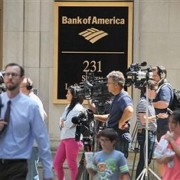
Least Sophisticated ConsumerThe Fair Debt Collection Practices Act (FDCPA) is the principal federal statute that governs the conduct of debt collectors and prohibits many kinds of abusive or deceptive behavior as set forth in the Act. In Florida, the Florida Consumer Collection Practices Act (FCCPA) prohibits much of the same actions. Both the FDCPA and FCCPA permit debtors to file lawsuits against debt collectors who they perceive are engaging in abusive or deceptive tactics to collect on a debt. One issue that often comes up in these cases is whether communications by the debt collector to the debtor are misleading. The standard that the Courts use in interpreting whether a communication is misleading is whether such communication would be misleading to the “least sophisticated consumer.”

So, who is the “least sophisticated consumer”? The Eleventh Circuit Court of Appeals considered that issue in the case of Helman v. Bank of America, 2017 WL 1350728 (11th Cir. April 12, 2017). Gayle Helman was a discharged debtor who received a mortgage statement from Bank of America. The mortgage statement was marked “FOR INFORMATIONAL PURPOSES” and also contained a disclosure indicating that Bank of America’s records indicated that the debt was discharged in bankruptcy and therefore no longer had a personal obligation to pay the debt. The debtor argued that the mortgage statement, despite these disclosures, was confusing and misleading to the least sophisticated consumer as it implied that a personal obligation to repay the debt remained.

On appeal, the Eleventh Circuit determined that the least-sophisticated-consumer standard was an objective standard that did not require proof of actual deception. However, the Court also determined that in construing what was misleading or deceptive to the least sophisticated consumer, such least sophisticated consumer must be considered to possess a rudimentary amount of information (for example, the effect of a bankruptcy discharge) and the ability to read a collection notice with common-sense care. The Court indicated that the least-sophisticated-consumer standard would protect the gullible, but that it would not extend to “bizarre or idiosyncratic interpretations” by a debtor. A reasonableness requirement remains when considering whether a communication was misleading or deceptive even to a least sophisticated consumer.

Note that this is a brief overview of some of the provisions of the FDCPA and FCCPA. There are important differences between the two Acts and some actions that might not be actionable under one may be actionable under the other. This area of the law is complex and you should seek the advice of an attorney if you have questions about this area of the law.


Brad Hissing is a Bankruptcy Attorney with over 26 years of experience in representing creditors, Trustees and other parties in bankruptcy cases. He has extensive experience in Creditors Rights and Insolvency matters in both consumer and Chapter 11 commercial cases. He can be reached at BradH@whhlaw.com or by phone at (813) 676-9075.

https://whhlaw.com/wp-content/uploads/2017/08/Least-Sophisticated-Consumer.jpg 235 340 Ted Hamilton https://whhlaw.com/wp-content/uploads/2026/06/Wetherington-Hamilton-logo.png Ted Hamilton2017-08-14 17:34:162017-08-14 17:34:16Helman v Bank of America Case Analysis: Who is The Least Sophisticated Consumer?
judge-gavel-court-orders

Why You Must Always Comply with Court Orders

June 26, 2017/in Articles, Debt Collection, General/by Ted Hamilton

judge-gavel-court-ordersCurrently, my practice focuses primarily in the area of collections, which in Florida, can be broken down into two main steps- they are obtaining Judgment and execution or collecting sums due as a result of the Court having entered Final Judgment.

Once final judgment has been entered, there are various methods available for collection of that judgment. Often, the Final Judgment contains language requiring defendants to complete what is known as a Fact Information Sheet as provided in Florida Rule of Civil Procedure Form 1.977, or defendants may be subpoenaed to appear at deposition in aid of execution.

Parties to a case are all required to comply with court orders; when a party fails to do so, the Court has the authority to find an individual in contempt. The individual is given the opportunity to purge herself/himself of the contempt by complying with the Court Order. The court may order monetary or other sanctions for failure to comply with a Court Order. I regularly hear judges tell defendants that there is no longer debtor’s prison and that they do not send people to jail for not having money to pay their debts, but when people fail to provide a fact information sheet as ordered by the Court or fail to appear at deposition after having been served, they can be found in contempt of court and, after proper notice (personal service), arrested. This is never our goal, but it can happen.

Approximately ten years ago, I brought my then 9 year-old daughter to work on “bring your daughter to work” day. The day began as a normal day (and I had no court appearances scheduled that day), but soon after arriving at work, I was told that I had to go to court because a defendant had been “picked up” for not appearing at a deposition. So I brought my daughter to the court house with me. When we arrived, a woman, our defendant, dressed in an orange jump suit and in hand cuffs, was in the court room. After a hearing in front of the presiding Judge, I took her deposition while my daughter waited patiently nearby; the Judge then ordered the woman’s immediate release. As you might imagine, this made quite an impression on my young daughter.

So what is the bottom line? Parties cannot be arrested for not having money to pay their debts…but parties to a case are all required to comply with Court Orders.


Collections Attorney Tampa

Joan W. Wadler has been a member of the Florida Bar since 1991. Her practice concentrates on Collections and Commercial Litigation, Real Estate Litigation and Associations Law.

https://whhlaw.com/wp-content/uploads/2017/06/judge-gavel-court-orders.jpg 360 640 Ted Hamilton https://whhlaw.com/wp-content/uploads/2026/06/Wetherington-Hamilton-logo.png Ted Hamilton2017-06-26 15:44:252017-06-26 15:44:25Why You Must Always Comply with Court Orders
US Bankruptcy Court Tampa

“I Just Received a Bankruptcy Notice, What Should I Do Now?”

June 5, 2017/in Articles, Bankruptcy, Debt Collection/by Ted Hamilton

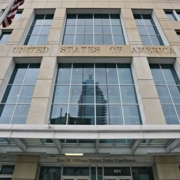
Bankruptcy fUS Bankruptcy Court Tampailings in the Middle District of Florida (Tampa, Ft Myers, Orlando and Jacksonville) increased in 2016 and are on the rise in 2017 after declining for several years due to the improving local and national economy. This means that if someone (a person or company) owes you money then there is an increased chance that you might receive a Suggestion of Bankruptcy or Notice of Commencement of Bankruptcy Case advising you that a bankruptcy case has been filed.

Sometimes Creditors receive the dreaded notification or other documents pertaining to the bankruptcy filing and choose to do nothing because they are unsure of what the documents mean and what they need to do. This is understandable—bankruptcy law is often counterintuitive and complicated and certainly different from how things work in the “real world”. By doing nothing, however, you risk serious financial penalties including loss of your claim and the ability to enforce a lien against the Debtor.

So what should you do when one of these Notices arrives in the mail? The first and most important thing that I can tell you is to not give up hope! As a Creditor you have several options depending on the type of claim that you have against the Debtor. Claims are typically secured (common examples are lien on a car, a homeowner’s association/condominium association lien, or a mortgage lien) or unsecured (such as debts from credit cards, medical bills, signature loans, or deficiencies after repossession or foreclosure sales). If you hold a judgment against the Debtor they debt may be either secured or unsecured depending on what steps you have taken to collect on the judgment prior to the bankruptcy filing and whether your judgment has “attached” to the Debtor’s assets, including real estate. Regardless of the type of claim you have, you should reach out to your bankruptcy attorney to discuss what options you have in a particular case.

Here are some situations that often arise in bankruptcy cases and which require action on your behalf as Creditor. Please note that there are many other common situations which can occur in bankruptcy case. I will discuss these in future articles.

Proofs of Claim: You may receive a Notice from the bankruptcy court advising you that there are funds available to pay creditors in a case and alerting you to file a Proof of Claim. It is important to file a Proof of Claim when you receive notice to do so. The Proof of Claim is a specific form that you must file in order to be paid. The form is comprehensive and may require detailed attachments depending on the type of claim you have against the Debtor. You must file a claim to be paid. I’ve been a bankruptcy attorney for over 25 years and I’m aware of several situations where Creditors have left “money on the table” by not filing a claim in a bankruptcy case despite the Bankruptcy Trustees holding significant funds which are available to pay creditors. There is also a deadline imposed by the Court for the filing of such claims. The deadline is called the “bar date”. Claims filed after the bar date are not paid except in certain very limited situations and only if the bankruptcy court expressly permits them to be paid. Needless to say, a bankruptcy Proof of Claim is an important document that needs to be properly handled. Contact your attorney with your proof of claim questions.

Valuations of Property, Lien-Stripping and “Cramdowns”: If you hold a secured claim against the Debtor it is important to know that the Bankruptcy Code in certain circumstances allows a Debtor to seek to “value” your claim and reduce the amount of your secured claim or even eliminate your lien entirely. Typically the Debtor will seek such valuation in a motion filed with the bankruptcy court which will be served on you. In many instances the motion will be served by “negative notice” which requires you to affirmatively oppose the Motion within a very short period of time (usually 14 to 21 days) failing which the Motion will be granted without hearing and without further notice. I’ve seen large homeowners/condominium association liens and second mortgage liens removed this way and oftentimes the affected creditor—after the fact—recalls receiving the Motion but doing nothing since it was not aware of what the Debtor was trying to do and the ultimate impact on the claim. It’s usually too late to do anything about one of these Orders once it is entered so make sure to contact your attorney if you receive a Motion or Debtor’s Plan which seeks to “value” your secured claim or otherwise modify your secured claim in any way.

Fraud/Dishonesty of Debtor: A Creditor might hold a claim resulting from fraud, misrepresentation, or other types of dishonest acts by the Debtor. The Bankruptcy Code provides that certain types of these claims will not be discharged (eliminated) in the Debtor’s bankruptcy case. However, if it up to the Creditor to assert the non-dischargeable nature of the claim in the case and obtain a determination from the bankruptcy court that the debt is one of these types. If the Creditor fails to seek such a determination in these cases then the debt will be discharged regardless of the nature and severity of the fraud! Needless to say, if you believe that fraud, misrepresentation or some type of dishonesty is involved on the part of the Debtor in regards to the debt owed to you then you should contact your bankruptcy attorney to review the same and discuss the best course of action available to you.

This article is an overview of some aspects of the bankruptcy process. The bankruptcy laws are complicated and there are many nuances and exceptions to the general rules. Seek advice from your attorney when you receive a bankruptcy notice or other documents pertaining to a bankruptcy case.


Brad Hissing is a Bankruptcy Attorney with over 26 years of experience in representing creditors, Trustees and other parties in bankruptcy cases. He has extensive experience in Creditors Rights and Insolvency matters in both consumer and Chapter 11 commercial cases. He can be reached at BradH@whhlaw.com or by phone at (813) 676-9075.


https://whhlaw.com/wp-content/uploads/2017/05/US-Court-Tampa.jpg 498 334 Ted Hamilton https://whhlaw.com/wp-content/uploads/2026/06/Wetherington-Hamilton-logo.png Ted Hamilton2017-06-05 15:56:332017-06-05 15:56:33“I Just Received a Bankruptcy Notice, What Should I Do Now?”
Fair Debt Collection Practice Act

Fair Debt Collections Guidance

May 22, 2017/in Articles, Debt Collection/by Ted Hamilton

Fair Debt Collection Practice ActWhen the Fair Debt Collection Practice Act (FDCPA), 15 U.S.C 1601, was first enacted, it specifically exempted creditors attempting to collect their own consumer debts.  With the enactment of the Consumer Financial Protection Bureau (CFPB), large financial consumer lenders have found that many of the protections afforded consumers by the FDCPA are being applied directly to the lenders, despite the exemption.

The CFPB has supervisory authority of financial institutions with assets over $10 billion and their affiliates and also over mortgage originators, mortgage servicers, payday lenders and private student lenders.  Therefore, such large lenders who are involved with consumer loans (made for personal, family household purposes) need to be aware of the need to be in Fair Debt Collections Practice Act compliance.

Some matters to consider to avoid non-compliance include:

  • Accurately stating the amount of the debt.
  • Communicate only with the consumer about the debt, with certain exceptions.
  • Do not communicate at unusual times (usually before 8 a.m. or after 9 p.m. in the consumers time zone).
  • Cease communication if the consumer advises they are represented by an attorney.
  • Cease communication at the consumer’s employer if advised to do so.
  • Do not harass or abuse the consumer.
  • Do not make false, deceptive or misleading statements.
  • Do not use unfair practices to collect a debt.
  • Do not attempt to collect a debt past the statute of limitations.

While this is a partial list, if you feel that the FDCPA or CFPB may apply to your debt collection efforts, you need to be well trained it these legal requirements. The FDCPA spells out in much detail what are prohibited practices, but you might be quite surprised to learn what the courts have found to be an “unfair”, “harassment” or “misleading”. Contact our experienced collections attorneys today to schedule a consultation at (813) 676-9082 or Info@whhlaw.com.

Thomas K. Sciarrino, Jr., Esq. 

https://whhlaw.com/wp-content/uploads/2017/05/Fair-Debt-Collection-Practice-Act-.jpg 250 400 Ted Hamilton https://whhlaw.com/wp-content/uploads/2026/06/Wetherington-Hamilton-logo.png Ted Hamilton2017-05-22 13:40:402017-05-22 13:40:40Fair Debt Collections Guidance
Page 1 of 3123

News Categories

  • Articles
  • Bankruptcy
  • Construction Law
  • Debt Collection
  • General
  • Litigation
Search Search

News Archive

  • 2025
  • 2021
  • 2019
  • 2018
  • 2017
  • 2016
  • 2015
  • 2014
  • 2013
Wetherington Hamilton, P.A.

Wetherington Hamilton, P.A.

812 W. Dr. MLK Jr., Blvd., Suite 203, Tampa, FL 33603
Phone: (813) 225-1918 • Fax: (813) 225-2531 • Email

Wetherington Hamilton, P.A.

Wetherington Hamilton, P.A.

812 W. Dr. MLK Jr., Blvd., Suite 203, Tampa, FL 33603
Phone: (813) 225-1918 • Fax: (813) 225-2531 • Email

© 2026 Wetherington Hamilton, P.A., All Rights Reserved. | Website Hosting & Web Development by RAD TECH
  • Privacy Policy
  • Accessibility
Scroll to top Scroll to top Scroll to top