Wetherington Hamilton, P.A.
  • Services
  • Process
  • Compliance
  • Attorneys
  • News
  • Contact
  • Payments
  • Refer A Claim
  • Menu Menu

What Is A Bankruptcy Proof of Claim?

February 11, 2021/in Bankruptcy/by Ted Hamilton

The simple answer is that a bankruptcy proof of claim is a document filed in a bankruptcy case that formally registers a claim against a debtor’s bankruptcy estate.  The Bankruptcy Rules provide for a specific proof of claim format which includes the name and address of the Creditor, the amount that the Debtor owes the Creditor as of the filing date of the bankruptcy case, the status of the claim (such as whether the claim is secured, unsecured or has special “priority” status as permitted by the Bankruptcy Code).  Filing a proof of claim is obviously a very important step for a Creditor to take in a bankruptcy case.  Failure to file a claim or mistakes in the preparation and filing of a claim may result in a Creditor receiving no payment in the bankruptcy case.

The Clerk of the Bankruptcy Court sends out a written notification of a bankruptcy filing to all creditors that are listed in the initial bankruptcy documents filed by a Debtor or Debtors in the instance of a joint filing by married spouses.  This Notice of Bankruptcy Case will set forth the deadline for filing a proof of claim (if set by the Court at the filing of the case) or will state that a proof of claim deadline will be noticed later in the case if the Bankruptcy Trustee recovers assets in the case.  The Clerk’s Notice will also include the Proof of Claim form and instructions for completing it as well as instructions regarding how and where to file it.

There are various types of bankruptcy cases and each type has specific proof of claim filing requirements.  This article will focus on the most common bankruptcy types—Chapter 7, Chapter 13 and Chapter 11.  In a Chapter 7 bankruptcy case if there is any property or other assets that can be sold or otherwise administered for the benefit of creditors then Creditors will be notified to file a proof of claim and will be notified of the deadline for filing such claims by the Court.  Creditors must file a claim by the deadline (the “bar date”) in order to receive a distribution in the case.  Generally, a claim that is filed late will not receive any payment in the bankruptcy case.  Chapter 13 cases are similar though in these cases the bar date will be 70 days from the date of the filing of case and will be set forth in the Notice of Bankruptcy Case that a Creditor receives after the bankruptcy filing.  This proof of claim filing deadline applies to both secured and unsecured Creditors in order to receive distributions from the Chapter 13 Trustee as set forth in the Debtor’s Chapter 13 Plan.  It is important to recognize that even if a Chapter 13 provides for payments to a Creditor, such Creditor will not receive payment from the Chapter 13 Trustee unless a proof of claim has been filed.

Chapter 11 bankruptcy cases are most often filed for businesses which seek to propose a plan to reorganize and continue business once the bankruptcy case is concluded.  There is an exception to the general proof of claim filing requirement that is oftentimes applicable in Chapter 11 cases.  A Chapter 11 Debtor will file Schedules with the Bankruptcy Court which lists the Debtor’s assets and liabilities as well as the state of the Debtor’s financial affairs at filing.  The Debtor will list the Creditor’s claim on these Schedules as well as the type of claim (secured, unsecured, or priority) and the amount of the Creditor’s claim.  The Debtor may also list the Creditor’s claim as “disputed, unliquidated or contingent”.  A creditor need not file a proof of claim in a Chapter 11 case IF the claim is listed correctly as to the type of claim and the amount of the claim AND is not listed as disputed, unliquidated or contingent. Assuming that all of these parameters are met then the Debtor will make distribution to the Creditor based upon the terms of its confirmed Chapter 11 Plan.  However, if all of these parameters are not met then the Creditor must file a proof of claim by the bar date set by the Court or else the Creditor will be deemed bound by what the Debtor has scheduled in regards to the claim.

A Creditor’s proof of claim that is properly and timely filed is deemed under the Bankruptcy Rules to be correct as to the validity and amount of the claim.  However, the Debtor, Trustee or other party in interest may object to the claim which puts the burden of proof on the Creditor to prove the validity of the claim.  Some common reasons for an objection to be filed include a dispute as to the amount of the claim; a dispute as to the classification of the claim (such as secured or unsecured), a failure to attach proper documents evidencing the Debtor’s liability for the claim and so forth.  If a claim is filed after the bar date then the Debtor or Trustee will likely object to the claim as late and seek to disallow it or subordinate the late-filed claim to the claims of timely filed creditors.

A creditor will have the opportunity to respond to an objection to its claim though this response would need to be filed by an attorney within the usually short time period set by the Court after the objection is filed.  Failure on the part of the creditor to respond to an objection will often result in the objecting party (such as the Debtor or Trustee) receiving an Order permitting the relief sought in the objection, such as disallowance or reduction of the allowed amount of the claim.  The Bankruptcy Court will schedule a hearing to consider the objection and the Creditor’s response in support of its claim and will make a determination as to the allowance of the claim.  The Court may allowed the claim as filed or may disallow it in its entirety or may determine that the claim is to be allowed but modified in some way such as a change in the category of claim (for example a secured claim being changed to an unsecured claim) or a change in the amount of such claim.  Creditors are well advised to carefully review correspondence received in bankruptcy cases in order to monitor whether an objection to claim has been filed.  If such an objection is filed then the creditor should notify its attorney immediately in order to take appropriate steps to address the objection and preserve the claim.

 

https://whhlaw.com/wp-content/uploads/2018/03/Bankruptcy-Proof-of-Claim-e1613077021899.jpg 363 640 Ted Hamilton https://whhlaw.com/wp-content/uploads/2026/06/Wetherington-Hamilton-logo.png Ted Hamilton2021-02-11 20:49:022021-02-11 20:49:02What Is A Bankruptcy Proof of Claim?
chapter-13 bankruptcy

What is a Bankruptcy Meeting of Creditors?

July 12, 2019/in Articles, Bankruptcy/by Ted Hamilton


At the beginning of any Bankruptcy case, the Clerk of the Bankruptcy Court mails a written notification of a bankruptcy filing.  All creditors listed in initial bankruptcy documents filed by a Debtor receive the Notice.  This Notice of Bankruptcy Case sets forth the date, time and location of a Meeting of Creditors along with other information.

1.The Purpose of the Meeting of Creditors

The purpose of the Meeting of Creditors in a bankruptcy case is confusing to many creditors.   Section 341 of the Bankruptcy Code (the terms are often used interchangeably) authorizes the Creditors Meeting.  Thus, the Creditors Meeting is sometimes referred to as a 341 Meeting.  This Section of the Bankruptcy Code requires a Meeting of Creditors in every bankruptcy case.   The 341 Meeting allows the questioning the Debtor under oath pertaining to the Debtor’s assets and liabilities.

2.Who conducts the Meeting of Creditors

The Bankruptcy Trustee appointed to administer the case or the United States Trustee in a Chapter 11 case where no Trustee has been appointed holds the Meeting of Creditors.  There is no court reporter present at the Meeting (unless the Creditor arranges to have a court reporter present).  The Meeting is recorded digitally.  A Creditor may obtain a recording of the Meeting on a CD by contacting the Office of the United States Trustee after the Meeting.

Chapter 7 Cases

At the Meeting of Creditors in a Chapter 7 bankruptcy case, the Trustee questions the debtor as follows:

1.Reviews the Debtor’s bankruptcy petition and schedules filed in the case;

2. Confirming the Debtor’s identity;

3. Attempts to locate any property or other assets that can be sold or otherwise administered for the benefit of creditors;

4. Questions the Debtor about any transfers of property or other assets made by the Debtor prior to the filing of the case.  The Bankruptcy Code provides that certain transfers can be avoided (reversed) by the Trustee and the property transferred brought back into the bankruptcy case;

5. Alternatively, depending on the facts of the matter, the Trustee may seek to obtain a money judgment as to the recipient of the transfer if it is avoidable.

Chapter 13 Cases

The Standing Chapter 13 Trustee, in a case filed under Chapter 13,  questions the Debtor on whether the Debtor’s Chapter 13 Plan properly addresses creditors claims and complies with the terms of the Bankruptcy Code.

Chapter 11 Cases

In a Chapter 11 case, the United States Trustee (or Chapter 11 Trustee if one is appointed) generally questions the Debtor (or the Debtor’s representative in a business case) about the Debtor’s assets, liabilities, finances and conduct.  In a business case (which comprises most Chapter 11 cases) the United States Trustee will inquire as to the Debtor’s business and reasons for filing the bankruptcy case.  The Trustee will also inquire as to the Debtor’s intention and anticipated proposal as to a plan for reorganization.  The Trustee will also inquire as to whether the Debtor’s expected future income and anticipated future expenses are consistent with such a Plan.  The United States Trustee will also question the Debtor to ensure that the Debtor understands that the Debtor must comply with specific reporting, insurance, banking and other requirements.

3.The Meeting of Creditors as an Opportunity for Creditors

In all  cases, the Creditor uses the Meeting of Creditors as an opportunity to question the Debtor about the Debtor’s financial practices, the possibility of claiming a debt to be non-dischargeable due to fraud or other reasons.  The Creditor might also want to determine the circumstances pertaining to when the Debtor incurred the indebtedness owing to the Creditor.  For example, the Creditor would question the Debtor as to the loan (credit) application and the accuracy and completeness of information set forth in such application.  All of these questions might be helpful in determining whether the claim of the creditor might not be wiped out or reduced by the bankruptcy filing.

Likewise, the Creditor might question the Debtor as to assets and property and other collateral (if any) which secures the debt, the condition of such collateral and whether the collateral had been sold or otherwise transferred prior to the filing of the case.  The Creditor may also ask about the Debtor’s use of business income and payments made to insiders prior to the filing of the case.  Other questions in a Chapter 11  might focus on mismanagement or fraud in the Debtor’s financial operation.

Creditors  attend the Meeting of Creditors on their own behalf or through their attorney for the purpose of questioning the Debtor and providing information to the Trustee.  Creditors  attending a Meeting may have information about undisclosed assets or transfers made by a Debtor which are not set forth on the Debtor’s bankruptcy documents filed with the Court and made known to the Trustee.  In addition, Creditors choosing to attend a Meeting of Creditors may use the opportunity to question the Debtor under oath to investigate whether there is a basis for asserting that the Debtor is not entitled to a discharge or that the debt owed to the Creditor is non-dischargeable in the bankruptcy case on account of fraud or another basis.

By Brad Hissing, Esq.


https://whhlaw.com/wp-content/uploads/2017/06/chapter-13-bankruptcy.jpg 913 2184 Ted Hamilton https://whhlaw.com/wp-content/uploads/2026/06/Wetherington-Hamilton-logo.png Ted Hamilton2019-07-12 10:49:502019-07-12 10:49:50What is a Bankruptcy Meeting of Creditors?
Bankruptcy Creditor Administrative Priority Claims

Bankruptcy Creditor Administrative Priority Claims Under Section 503(b)(9)

May 21, 2018/in Articles, Bankruptcy/by Ted Hamilton

So you are a vendor with unpaid invoices from a Client and receive the dreaded Notice of Commencement of Bankruptcy Case. You check your records and see that you have made a large product delivery (or series of deliveries) to the Client—now Debtor—within a short period of time prior to the filing of the bankruptcy case . Are you out of luck? Maybe not. Depending on what you delivered to the Debtor and when you made these deliveries, you may be able to assert what is called a 20-day administrative priority claim as to the portion of your claim that fits within the requirements of this section of the Bankruptcy Code. Why is this important? Well, you may be able to change a portion of your claim against the Debtor from a general unsecured claim (which are often paid pennies on the dollar in a bankruptcy case, if at all) to an administrative claim which has a higher level priority in the claim distribution process. In Chapter 11 cases, administrative priority claims are often paid in full upon confirmation of the Plan so there is a very obvious benefit for a vendor to hold a 20-day administrative priority claim.

Section 503(b)(9) of the Bankruptcy Code provides for an administrative expense status for “the value of any goods received by the Debtor within 20 days before the date of commencement of a case under this title in which the goods have been sold to the debtor the ordinary course of such Debtor’s business.” Parsing apart this provision, a vendor must establish four elements to establish such a claim—the value of goods that were sold to the Debtor in the ordinary course of the Debtor’s business and received by the Debtor within 20 days of the bankruptcy filing. The specific circumstances of a transaction or series of transactions can determine whether a claim fits within this section and will be allowed as an administrative priority.

First, the vendor’s claim will only be allowed for goods sold to the Debtor. The Bankruptcy Code does not define what “goods” are, so the Courts have come up with various decisions as to what are or are not ‘goods” under this section. In some cases the determination is clear—for example tangible supplies provided to the Debtor such as machinery, equipment or parts are goods as determined in several cases. Likewise, Courts have found chemicals provided as fertilizer to a farming enterprise and produce delivered to a restaurant supplier to be goods meeting the requirements of this section. What has proved difficult for the Courts to determine is when a vendor supplies goods and services at the same time. Let’s say the chemicals delivered to the farming operation above are also loaded by the vendor into fertilizer sprayers at the time of delivery for the farm’s use. Should the value of the fertilizer loading be part of the administrative priority claim? The decisions in this area vary between the Courts so a vendor facing an issue of this sort will likely need to contact an attorney for guidance.

The second element of an administrative priority claim requires that the goods actually be sold to the Debtor in the ordinary course of the Debtor’s business operations. There is a dearth of case law on this aspect of a 503(b)(9) claim and the Bankruptcy Code does not define what the term “sold” entails, though it appears clear that goods that are leased to the Debtor would not fit within this section. A vendor should contact counsel when it confronts a situation in this regard as certain vendor-debtor relationships can be murky. Likewise, the Bankruptcy Code does not define what is “ordinary course” for a Debtor’s business operations. What is “ordinary course” is often not an issue in an administrative priority claim determination. However, as above, a vendor confronted with an unclear situation should consult with a bankruptcy creditor’s attorney for guidance in establishing its claim.

The third element requires that the Debtor have actually received the goods in the 20 day period prior to the filing of the bankruptcy case. Vendors are cautioned to understand the difference between invoicing and actual delivery and receipt by the Debtor. Invoicing can occur before, at the same time, or after delivery and receipt so a vendor should have a clear understanding of its course of dealings with the Debtor in order to determine when the Debtor came into physical possession of the goods. Oftentimes the vendor-debtor relationship can be murky in this regard requiring a very fact-dependent analysis in order to ascertain whether a vendor’s claim fits into an administrative priority status.

Finally, the administrative priority claim would be for the value of the goods that meet all of the above requirements. The Courts will often look to the invoice and consider the value of the goods to be the invoice price of such goods though this is not always the case, especially in a situation where, as set forth above, there is a combination of goods and services provided as part of a vendor’s delivery to a Debtor or a question as to whether the goods described on the invoice or invoices were what was actually delivered to the Debtor.

Can a vendor assert a 20-day administrative priority claim in any bankruptcy case? The answer is yes—administrative priority claims under §503(b)(9) can be asserted in regards to claims under any Chapter of the Bankruptcy Code, though, effectively, they are of significant value to Vendors only in Chapter 11 cases. The reason is that the highest level of priority in cases in other Chapters of the Bankruptcy Code (such as Chapter 7 cases ) are the expenses of the costs of administration, such as the Trustee’s fee, the attorneys for the Trustee’s fees and costs and so forth. Administrative priority claims under §503(b)(9), though they retain a priority status in these cases filed in other Chapters, are a lower-level of priority and are not paid unless the costs of administration are first paid in full.

What is the process for a vendor to assert an administrative priority claim under §503(b)(9)? The short answer is that it is dependent on the process used in the Court where the case is pending, the process that may have been ordered by the Court in a particular case or the terms of a Chapter 11 Debtor’s Plan of Reorganization. The Bankruptcy Code itself does not specify the process. There is a significant variability between the Bankruptcy Courts as to how and when a vendor must make its claim, so it is easy for a vendor to get tripped up and inadvertently fail to timely make such a claim or make the claim in the “wrong” way. Therefore it is important for a vendor to contact its creditor counsel to devise the strategy for making the claim timely and in the correct way.


Brad Hissing is a Bankruptcy Attorney with over 26 years of experience in representing creditors, Trustees and other parties in bankruptcy cases. He has extensive experience in Creditors Rights and Insolvency matters in both consumer and Chapter 11 commercial cases. He can be reached at BradH@whhlaw.com or by phone at (813) 676-9075.

https://whhlaw.com/wp-content/uploads/2018/05/Bankruptcy-Creditor-Administrative-Priority-Claim.jpg 360 748 Ted Hamilton https://whhlaw.com/wp-content/uploads/2026/06/Wetherington-Hamilton-logo.png Ted Hamilton2018-05-21 17:11:462018-05-21 17:11:46Bankruptcy Creditor Administrative Priority Claims Under Section 503(b)(9)

Creditors: Do You Have Unclaimed Funds from a Bankruptcy Filing?

March 22, 2018/in Articles, Bankruptcy/by Ted Hamilton

Do you have unclaimed bankruptcy funds waiting for you? What are unclaimed funds? Unclaimed funds are monies paid by the Bankruptcy Trustee appointed to administer a bankruptcy estate to the Bankruptcy Clerk, who then is the custodian of those funds until the person entitled to those funds files an application to pay the unclaimed funds to them.

In bankruptcy cases that have assets, the Trustee pays out money collected from liquidating the assets to creditors who have filed claims in a particular case. Sometimes, the money paid out by a Trustee, always issued as a check, is returned by the post office as undeliverable or the check is not cashed within 90 days. By law, in Chapter 7 and Chapter 13 cases, the Trustee is required to deposit those funds to the court as unclaimed. In most cases, the Claimant did not receive the check and it was returned to the Trustee as undeliverable typically because the claimant had moved and did not report the change of address to the court and the Trustee. The Clerk of the Bankruptcy Court will hold these funds for several years. The unclaimed funds are still subject to the claims of Creditors even after they are turned over to the Clerk. It should be noted that the claimants due unclaimed funds consist of both commercial and non-commercial creditors and that some of these unclaimed funds are in significant amounts. In fact, a recent estimate of the amount of unclaimed funds held by the Bankruptcy Courts or the U.S. Treasury is staggering—in excess of $200 million.

Usually, as set forth above, the unclaimed funds are the results of returned check from a Bankruptcy Trustee intended to be a distribution on a claim filed by a Creditor in a specific bankruptcy case. If you believe that you may be entitled to unclaimed funds in bankruptcy, then the first step would be to check the Unclaimed Funds Directory for the Bankruptcy Court where you filed your proof of claim. You can conduct this search yourself or your bankruptcy attorney can make this search for you. If you are unsure of the Court where you filed the claim then your bankruptcy attorney can assist you in developing a strategy for locating the claim. Your attorney will also be able to file the Motion or Application required by the Bankruptcy Court as well as prepare the appropriate paperwork in evidence of your claim to the unclaimed funds. In addition, the attorney will prepare and file the necessary IRS forms and governmental forms such as the Administrative Office of the US Courts TIN Certification Form necessary for the Bankruptcy Court to disburse the funds to a commercial creditor.

Since there are a significant amount of unclaimed funds sitting in the Bankruptcy Court registries and the U.S. Treasury, isn’t it worthwhile to check to see if you are entitled to any of these funds as claimant and, if you are, to make the effort to have the funds provided to you? The attorneys at Wetherington Hamilton are ready to assist commercial and non commercial creditors in seeking your unclaimed funds, call us today at (813) 676-9075.


Brad Hissing is a Bankruptcy Attorney with over 26 years of experience in representing creditors, Trustees and other parties in bankruptcy cases. He has extensive experience in Creditors Rights and Insolvency matters in both consumer and Chapter 11 commercial cases. He can be reached at BradH@whhlaw.com or by phone at (813) 676-9075.

https://whhlaw.com/wp-content/uploads/2018/03/Unclaimed-Bankruptcy-Funds.jpg 250 380 Ted Hamilton https://whhlaw.com/wp-content/uploads/2026/06/Wetherington-Hamilton-logo.png Ted Hamilton2018-03-22 13:03:562018-03-22 13:03:56Creditors: Do You Have Unclaimed Funds from a Bankruptcy Filing?

Maximizing Bankruptcy Proof of Claim, Minimizing Objections

March 5, 2018/in Articles, Bankruptcy/by Ted Hamilton

Bankruptcy Proof of Claim

Are you a creditor in a bankruptcy case? Did you receive a Notice from the Bankruptcy Court advising you that there are funds available to pay creditors in a case and alerting you to complete and file a Proof of Claim? If so, then the Notice would have also included a blank Proof of Claim form for you to complete and file with the Bankruptcy Court. The Proof of Claim form is specific and comprehensive and may require detailed attachments depending on the type of claim you have against the Debtor. There are also time constraints involved in the process as well. The Bankruptcy Court will set a deadline for the filing of such claims. The deadline is called the “bar date”. Claims filed after the bar date are not paid except in certain very limited situations and only if the bankruptcy court expressly permits them to be paid—more about this in a bit.

In consumer bankruptcy cases (Chapter 7 and Chapter 13 cases) you must file a claim timely (by the bar date) in order to be paid. The process is somewhat different in Chapter 11 cases. A creditor does not need to file a claim if three conditions are met. First, the Debtor must not have listed the debt on its bankruptcy schedules as “disputed, contingent or unliquidated”. Second, the creditor must agree with the amount that the debtor has listed as due and owing on these bankruptcy schedules. Third, the creditor must agree with the Debtor’s classification of the type of claim—such as secured, unsecured or priority—in the bankruptcy schedules. If any (or all) of these conditions are absent in a Chapter 11 case then the creditor must file a claim for the full amount which is owed by the Debtor and set forth the appropriate classification (secured, unsecured or priority) in the claim.

I’ve been a bankruptcy attorney for over 25 years and I’m aware of several situations where creditors have left “money on the table” by not filing a claims in bankruptcy cases despite receiving notice in Chapter 7 or Chapter 13 consumer bankruptcy cases that the Bankruptcy Trustee is holding funds which are available to pay creditors. In fact, in many of these consumer cases, the Trustee ends up with a surplus case and will often seek to make contact with creditors listed in the bankruptcy schedules to solicit them to get a claim filed. Likewise, in Chapter 11 cases, I’ve seen several situations where only a small number of creditors have filed claims when the Debtor has proposed to make a significant payment to creditors with claims in a certain class set forth in the Chapter 11 Plan.

The Proof of Claim form requires creditors to choose the classification of the claim (secured, unsecured or priority) as well as the amount that the Debtor owes the creditor as of the date of the filing of the bankruptcy case. For secured accounts, such as a mortgage or lien on personal property or a vehicle, this can require some detailed accounting to property set forth interest, late charges, attorney’s fees and other charges as well as accrued escrow items. If this accounting is incorrect, then the Trustee or Debtor can object to the claim. Again, more about that in a bit. The Proof of Claim will also need to include copies of supporting documents evidencing the claim such as the loan documents (promissory notes, contracts), the security documents (security agreements, mortgages) and other documents such as judgments, garnishments and so forth. Failure to include the loan documents will likely result in an objection to the claim by an interested party so it is very important that the Proof of Claim be filed with these documents attached.

Claims that are filed after the bar date will likely draw an objection by the Trustee or the Debtor. Obviously, the best way to avoid this is to make sure that the claim is filed on time. The fact that a claim was filed late may completely invalidate it and prevent it from being paid. However, a creditor with a late-filed claim is not completely out of luck. If a creditor files a claim late and there is an objection filed to it, then the creditor can argue that the failure to timely file the claim was excusable. The burden, however, is on the creditor to show excusable neglect and it this is often a difficult burden for the creditor to meet. There are also differences in the operation of the excusable neglect standard depending on whether the bankruptcy case is a Chapter 7 or 13 consumer case or a Chapter 11 case. A creditor facing this issue will need to discuss how best to address the situation with a bankruptcy attorney.


A creditor’s claim may draw an objection from the Debtor of Trustee for any number of reasons. For example, the objection to the claim might dispute the amount that the creditor alleges is owed or dispute the creditor’s classification of the claim as secured, unsecured or priority. The objection might dispute the validity of the claim if there are no supporting documents to evidence the claim or if the debt is believed to be uncollectable due to being barred by the applicable statute of limitations for the type of claim that the creditor holds against the debtor.

A creditor can minimize the chance of an objection being filed to its claim by taking steps to ensure that the claim lists the correct amount owed, lists the correct classification of the type of claim, contains legible copies of the documents evidencing the claim and is signed and timely filed with the Bankruptcy Court. If a creditor is facing an objection to its claim then it should contact a bankruptcy attorney to develop a strategy for tackling the issue as oftentimes it is possible for a creditor to fight the objection and get its claim allowed and paid in the case.


Brad Hissing is a Bankruptcy Attorney with over 26 years of experience in representing creditors, Trustees and other parties in bankruptcy cases. He has extensive experience in Creditors Rights and Insolvency matters in both consumer and Chapter 11 commercial cases. He can be reached at BradH@whhlaw.com or by phone at (813) 676-9075.

https://whhlaw.com/wp-content/uploads/2018/03/Bankruptcy-Proof-of-Claim-e1613077021899.jpg 363 640 Ted Hamilton https://whhlaw.com/wp-content/uploads/2026/06/Wetherington-Hamilton-logo.png Ted Hamilton2018-03-05 17:06:352018-03-05 17:06:35Maximizing Bankruptcy Proof of Claim, Minimizing Objections
Debtor Bankruptcy Court Case Analysis

Monson Case Analysis: Debtors Who Misuse Collateral May Forfeit Obtaining Discharge of Debt in Bankruptcy

January 16, 2018/in Articles, Bankruptcy, Debt Collection/by Ted Hamilton

Debtor Bankruptcy Court Case Analysis

Borrowers sometimes sell, misuse or misappropriate secured collateral (i.e. equipment, inventory or vehicles) without notification to the lienholder. What remedy does the lienholder have if the Borrower subsequently files a bankruptcy case? What happens if the lienholder’s security interest is not properly perfected? The Eleventh Circuit of Appeals considered both issues in the case of In re Monson, 2016 WL 6833332 (11th Cir. Nov. 21, 2016). In this case, the Court determined that where a debtor had knowledge of a Creditor’s asserted lien on Property and subsequently sold or disposed of the Property without the lienholder’s consent, that act constitutes a willful and malicious injury under Bankruptcy Code § 523(a)(6) with the result that the debt is not discharged in the bankruptcy case. Importantly, this result stands even if the Creditor’s lien is not properly perfected. The analysis is whether the debtor has knowledge of the lienholder’s claim and nevertheless disposes of the collateral without notice to the lienholder. Decisions by the Eleventh Circuit Court of Appeals are binding on the Bankruptcy Courts in Florida, so this case gives Creditor’s a potent weapon in their arsenal in appropriate cases when collateral is sold or otherwise disposed of by the borrower prior to the filing of a bankruptcy case.

The Monson case is very fact-intensive and the Court’s decision seems to be based upon the nefarious activities of the Borrower so it is important to know the facts in order to understand the ruling. Creditor (“Segundo”) loaned an internet café owner (“Monson”) $130,000 for the purpose of equipment to be used in the business in Hillsborough County, Florida. The parties agreed that the loan was to be secured by the equipment but the loan was not property perfected as the UCC-1 lien document filed with the State of Florida was not signed by the Borrower. The equipment was seized by the Hillsborough County Sheriff’s Office and the business shut down as an illegal gambling operation. The Creditor demanded return of the equipment or liquidation of the equipment and repayment of the loan after the equipment was seized and while it was still in possession of law enforcement but received no response from the Borrower who ignored the Creditor’s calls, letters and emails.

The Borrower entered into an agreement with the Hillsborough County Sheriff’s Office so charges were never filed. The agreement allowed the Borrower to recover the equipment provided that he remove the equipment from Hillsborough County and not operate any gambling operations in the County. The equipment was thereafter returned to the Borrower who then moved the equipment to the Jacksonville area and opened up another internet café. The Borrower ignored the Creditor’s repayment demands so the Creditor thereafter filed a state court lawsuit against the Borrower and successfully obtained a judgment for the initial $130,000 loan amount. The Borrower then filed a Chapter 7 bankruptcy case seeking to discharge the debt.

The Borrower returned the remaining equipment to the Creditor while the bankruptcy case was pending and the Creditor thereafter obtained an appraisal which indicated that the remaining equipment had value of only $12,050 upon its return. The Creditor thereafter sought a determination in the Bankruptcy Court that the Debtor Monson’s indebtedness was non-dischargeable on a variety of grounds. The Bankruptcy Court found that the Debtor’s actions constituted a willful and malicious injury to the Creditor under 11 U.S.C. § 523(a) and entered a judgment of nondischargeability in the amount of $117,950 which was the difference between the original loan amount and the appraised value of the equipment returned to the Creditor. The Bankruptcy Court based its decision on its factual findings that the Borrower was aware of the Creditor’s asserted security interest and of the Creditor’s demand for return of the equipment or sale of the equipment and repayment of the debt. The Bankruptcy Court’s decision was also based upon its finding that the Creditor never consented to removal of the equipment to the Jacksonville area and its use in a new internet café.

The crucial issue on appeal was whether the Debtor’s actions were both willful and malicious. As to the willfulness requirement, the Eleventh Circuit concluded that absconding with the equipment and using it to open a new internet center was an intentional act the purpose of which was to cause injury or which was substantially certain to cause injury. In so doing, the Eleventh Circuit specifically noted that a knowing breach of a clear contractual obligation that is certain to cause injury is sufficient to prevent a discharge of the debt regardless of whether such conduct can be classified a tort under the law.

As to the maliciousness requirement, the Eleventh Circuit determined that the Debtor committed a malicious injury in the appropriation of the equipment because the injury was wrongful, without just cause and was excessive. The Eleventh Circuit found that it was proper for the Bankruptcy Court to imply malice as the weight of the evidence in the case was that the Debtor’s actions were wrongful and without just cause. Specifically, the Court found that the collapse of the initial business operation (the internet café in Hillsborough County) did not relieve the Debtor of the contractual obligations which he entered into nor “…gave him carte blanche to make off with equipment that he bought with someone else’s money.” The Court further determined that the Debtor’s behavior fell outside the scope of reckless or unfortunate but non-malicious acts that did not rise to the level of a willful or malicious injury (such as an automobile accident where it was not shown that the driver intended to cause the accident or the injury).

The Borrower argued that the Creditor’s failure to properly perfect the security interest in the equipment barred the Creditor from seeking a determination that the debt was not discharged in the bankruptcy case. The Eleventh Circuit gave short shrift to this argument and held that “…(w)hehter or not a lienholder’s security interest is properly perfected or recorded, where the debtor has knowledge of the lienholder’s claim and subsequently sells or disposes of the property at issue without notice to the lienholder, that act constitutes a willful and malicious injury under §523(a)(6). Specifically in the Monson case, the Eleventh Circuit determined that the Debtor knew that his actions were at least substantially certain to cause injury to the Creditor’s ability to seek repayment of its loan and thus the Debtor was not permitted to obtain a discharge of that debt.


Brad Hissing is a Bankruptcy Attorney with over 26 years of experience in representing creditors, Trustees and other parties in bankruptcy cases. He has extensive experience in Creditors Rights and Insolvency matters in both consumer and Chapter 11 commercial cases. He can be reached at BradH@whhlaw.com or by phone at (813) 676-9075.

https://whhlaw.com/wp-content/uploads/2018/01/Bankruptcy-Court-Case-Analysis.png 172 610 Ted Hamilton https://whhlaw.com/wp-content/uploads/2026/06/Wetherington-Hamilton-logo.png Ted Hamilton2018-01-16 13:35:162018-01-16 13:35:16Monson Case Analysis: Debtors Who Misuse Collateral May Forfeit Obtaining Discharge of Debt in Bankruptcy
Bankruptcy_Law_Chapter_13

New Official Form of Chapter 13 Plan for the Middle District of Florida Bankruptcy Courts

October 23, 2017/in Articles, Bankruptcy/by Ted Hamilton

Bankruptcy_Law_Chapter_13
The pending revisions to Federal Rule of Bankruptcy Procedure 3015.1 permit Bankruptcy Court Districts to “opt out” of the Official Form of Chapter 13 Plan approved by the Judicial Conference of the United States Courts. The judges of the Middle District of Florida Bankruptcy Court have elected to “opt out” and have approved a Local Form Model Chapter 13 Plan which is required to be used in all Divisions of the Middle District as of September 15, 2017. Please click HERE for a link to the Middle District Form Model Chapter 13 Plan (“Local Form Plan”).

The Local Form Plan complies with the upcoming Bankruptcy Rule changes in regards to the consistency, formatting and contents of a Form Plan. Specifically, any nonstandard provision which the Debtor includes in the Local Plan will be effective only if it is included in the section of the Plan designated for non-standard provisions. If a nonstandard provision is not included in this section then it is void. There is also a requirement that the Debtor indicate in the initial paragraph of the Local Form Plan that the Plan contains a nonstandard provision. Likewise, the Debtor must indicate in this initial paragraph whether the Plan does (or does not) limit the amount of a secured claim based on a valuation of the collateral for a claim and must also indicate whether the Debtor does (or does not) seek to avoid in its entirety a security interest or lien.
Other provisions of the Local Form Plan that are consistent with the pending revisions to the Rule 3015.1 are separate paragraphs providing for the following:

  • curing of any default and maintaining payments on a claim secured by the Debtor’s principal residence;
  • paying a domestic-support obligation;
  • paying a claim for debt incurred within 910 days of the filing date of the case which secured by a purchase-money security interest in a motor vehicle acquired for the Debtor’s personal use, or for any other purchase-money indebtedness incurred by the Debtor within one year of the filing date of the case.

The Local Form Plan also contains new provisions which are in addition to those required by the revisions to Rule 3015.1. One new section of the Local Form Plan more clearly provides for the designation of attorneys fees to be paid through the Plan, including fees for mortgage modification mediation and post-confirmation monitoring fees. Another new section of the Plan provides for the pre-confirmation disbursement of adequate protection to secured creditors by the Trustee, however, the Plan must propose the disbursement of adequate protection and be funded sufficiently for the Trustee to make such disbursements and the Creditor must have a claim filed in order to receive such payments. Finally, an additional section of the Local Form Plan requires the Debtor to set forth the treatment of leases and provides for the disbursement of adequate protection to lessors.

The new Local Form Plan should provide some much-needed consistency to Creditors who find themselves involved in a Chapter 13 bankruptcy case in the Middle District of Florida and assist Creditors in knowing which matters need to be directed to their attorneys for representation. If you are a Creditor and receive one of these new Local Form Plans and are unsure how the Plan could affect you then you should consult your attorney.


Brad Hissing is a Bankruptcy Attorney with over 26 years of experience in representing creditors, Trustees and other parties in bankruptcy cases. He has extensive experience in Creditors Rights and Insolvency matters in both consumer and Chapter 11 commercial cases. He can be reached at BradH@whhlaw.com or by phone at (813) 676-9075.

https://whhlaw.com/wp-content/uploads/2017/10/Bankruptcy_Law_Chapter_13.jpg 210 570 Ted Hamilton https://whhlaw.com/wp-content/uploads/2026/06/Wetherington-Hamilton-logo.png Ted Hamilton2017-10-23 16:18:412017-10-23 16:18:41New Official Form of Chapter 13 Plan for the Middle District of Florida Bankruptcy Courts
US Bankruptcy Court Tampa

“I Just Received a Bankruptcy Notice, What Should I Do Now?”

June 5, 2017/in Articles, Bankruptcy, Debt Collection/by Ted Hamilton

Bankruptcy fUS Bankruptcy Court Tampailings in the Middle District of Florida (Tampa, Ft Myers, Orlando and Jacksonville) increased in 2016 and are on the rise in 2017 after declining for several years due to the improving local and national economy. This means that if someone (a person or company) owes you money then there is an increased chance that you might receive a Suggestion of Bankruptcy or Notice of Commencement of Bankruptcy Case advising you that a bankruptcy case has been filed.

Sometimes Creditors receive the dreaded notification or other documents pertaining to the bankruptcy filing and choose to do nothing because they are unsure of what the documents mean and what they need to do. This is understandable—bankruptcy law is often counterintuitive and complicated and certainly different from how things work in the “real world”. By doing nothing, however, you risk serious financial penalties including loss of your claim and the ability to enforce a lien against the Debtor.

So what should you do when one of these Notices arrives in the mail? The first and most important thing that I can tell you is to not give up hope! As a Creditor you have several options depending on the type of claim that you have against the Debtor. Claims are typically secured (common examples are lien on a car, a homeowner’s association/condominium association lien, or a mortgage lien) or unsecured (such as debts from credit cards, medical bills, signature loans, or deficiencies after repossession or foreclosure sales). If you hold a judgment against the Debtor they debt may be either secured or unsecured depending on what steps you have taken to collect on the judgment prior to the bankruptcy filing and whether your judgment has “attached” to the Debtor’s assets, including real estate. Regardless of the type of claim you have, you should reach out to your bankruptcy attorney to discuss what options you have in a particular case.

Here are some situations that often arise in bankruptcy cases and which require action on your behalf as Creditor. Please note that there are many other common situations which can occur in bankruptcy case. I will discuss these in future articles.

Proofs of Claim: You may receive a Notice from the bankruptcy court advising you that there are funds available to pay creditors in a case and alerting you to file a Proof of Claim. It is important to file a Proof of Claim when you receive notice to do so. The Proof of Claim is a specific form that you must file in order to be paid. The form is comprehensive and may require detailed attachments depending on the type of claim you have against the Debtor. You must file a claim to be paid. I’ve been a bankruptcy attorney for over 25 years and I’m aware of several situations where Creditors have left “money on the table” by not filing a claim in a bankruptcy case despite the Bankruptcy Trustees holding significant funds which are available to pay creditors. There is also a deadline imposed by the Court for the filing of such claims. The deadline is called the “bar date”. Claims filed after the bar date are not paid except in certain very limited situations and only if the bankruptcy court expressly permits them to be paid. Needless to say, a bankruptcy Proof of Claim is an important document that needs to be properly handled. Contact your attorney with your proof of claim questions.

Valuations of Property, Lien-Stripping and “Cramdowns”: If you hold a secured claim against the Debtor it is important to know that the Bankruptcy Code in certain circumstances allows a Debtor to seek to “value” your claim and reduce the amount of your secured claim or even eliminate your lien entirely. Typically the Debtor will seek such valuation in a motion filed with the bankruptcy court which will be served on you. In many instances the motion will be served by “negative notice” which requires you to affirmatively oppose the Motion within a very short period of time (usually 14 to 21 days) failing which the Motion will be granted without hearing and without further notice. I’ve seen large homeowners/condominium association liens and second mortgage liens removed this way and oftentimes the affected creditor—after the fact—recalls receiving the Motion but doing nothing since it was not aware of what the Debtor was trying to do and the ultimate impact on the claim. It’s usually too late to do anything about one of these Orders once it is entered so make sure to contact your attorney if you receive a Motion or Debtor’s Plan which seeks to “value” your secured claim or otherwise modify your secured claim in any way.

Fraud/Dishonesty of Debtor: A Creditor might hold a claim resulting from fraud, misrepresentation, or other types of dishonest acts by the Debtor. The Bankruptcy Code provides that certain types of these claims will not be discharged (eliminated) in the Debtor’s bankruptcy case. However, if it up to the Creditor to assert the non-dischargeable nature of the claim in the case and obtain a determination from the bankruptcy court that the debt is one of these types. If the Creditor fails to seek such a determination in these cases then the debt will be discharged regardless of the nature and severity of the fraud! Needless to say, if you believe that fraud, misrepresentation or some type of dishonesty is involved on the part of the Debtor in regards to the debt owed to you then you should contact your bankruptcy attorney to review the same and discuss the best course of action available to you.

This article is an overview of some aspects of the bankruptcy process. The bankruptcy laws are complicated and there are many nuances and exceptions to the general rules. Seek advice from your attorney when you receive a bankruptcy notice or other documents pertaining to a bankruptcy case.


Brad Hissing is a Bankruptcy Attorney with over 26 years of experience in representing creditors, Trustees and other parties in bankruptcy cases. He has extensive experience in Creditors Rights and Insolvency matters in both consumer and Chapter 11 commercial cases. He can be reached at BradH@whhlaw.com or by phone at (813) 676-9075.

https://whhlaw.com/wp-content/uploads/2017/05/US-Court-Tampa.jpg 498 334 Ted Hamilton https://whhlaw.com/wp-content/uploads/2026/06/Wetherington-Hamilton-logo.png Ted Hamilton2017-06-05 15:56:332017-06-05 15:56:33“I Just Received a Bankruptcy Notice, What Should I Do Now?”
US Bankruptcy Court Tampa

Big Bankruptcy Rule and Form Changes Coming: Be Warned and Be Ready!

May 8, 2017/in Articles, Bankruptcy/by Ted Hamilton

bankruptcy-courtJust about every year changes are made to the rules and forms having to do with bankruptcy cases. This year there are extensive changes proposed in regards to the rules and forms having to do with the filing of claims and in regards to Chapter 13 cases generally.
The proposed changes will take effect on December 1, 2017 provided that Congress and the Supreme Court approve (such approval is likely). These Rules and Form changes will significantly change how Creditors should approach bankruptcy cases and implements significantly shortened timelines for Creditors to take action, especially in Chapter 13 cases.

The major changes to the Rules and Forms are as follows:

Rule 2002. Notice to Creditors.

The changes to this Rule specify that at Creditors are to be provided at least 21 days’ notice of the time fixed for filing an objection to confirmation of a Chapter 13 plan and be provided at least 28 days’ notice of the confirmation hearing in a Chapter 13 case.

Rule 3002. Filing of Proof of Claim.

The modifications to this Rule require all creditors—including secured creditors—to file proofs of claim within 70 days of the filing date of a Chapter 7, 12 or 13 case or within 70 days of the date of conversion of a case to Chapter 12 or Chapter 13. There is a provision in this Rule that permits a creditor an extension of time of up to 60 days to file a proof of claim upon motion and order if the creditor did not have a reasonable time to file a proof of claim because the debtor failed to timely file the list of creditors and addresses or if the creditor did not have a reasonable time to file a proof of claim because the notice was mailed to the creditor at a foreign address.

This Rule adds a two-stage deadline for filing proofs of claim pertaining to security interest (mortgage or other lien) on property that is the principal residence of the debtor. These proofs of claim must be filed with the appropriate form account history attachment and escrow account statement within 70 days of the filing date (or conversion date). In addition, in order to be timely, all other loan documents evidencing the claim—such as the promissory note, mortgage—must be filed as supplement to the proof of claim within 120 days of the filing date (or conversion date). For such a claim to be timely, both of these deadlines must be met.

This 70/120 day time period is significantly shortened compared to the current rules which permits a claim to be timely if it is filed within 90 days after the Section 341 Meeting of Creditors date which, in practice, permits claims to be filed within an approximately 120 to 140 day time period from the filing date or conversion date.

Rule 3007. Objections to Claims.

The proposed modifications require at least 30 days’ notice to affected creditors of an objection to claim. Notice can be provided by “negative notice” which requires the affected creditor to oppose the objection and request a hearing within such 30 day period. This Rule also sets forth how service of the objection and notice is to occur—for most cases the service will be by first class mail; however, if the claim was filed by an insured depository institution as defined in the Rules then such service shall be by certified mail.

Rule 3012. Determining the Amount of Secured Claims.

The changes to the Rule provide for the process for determining the amount of a secured claim, i.e. “valuation” of a secured claim. A debtor can request such determination by a provision in a Chapter 13 Plan, by motion or by objection to claim. The proposed changes specifically provide that the debtor’s proposed valuation can seek to avoid a lien in its entirety—i.e. a “lien strip”—resulting in the affected creditor only holding an unsecured claim. Permitting a debtor to seek valuation through a Plan is a significant change to the present practice in all of the Florida Districts and will require creditors to objection to confirmation of Chapter 12 and Chapter 13 Plans or else be bound by the Plan terms upon confirmation (see proposed changes to Rule 3015 below).

Rules 3015. Filing of Plan, Effect of Confirmation of Plan.

This Rule requires use of the Official Form of Chapter 13 Plan unless a Local Form has been adopted. The Middle District of Florida has adopted a Local Form Plan; however, as of the date of this writing, neither the Northern District nor Southern Districts of Florida have adopted such a Local Form Plan though it is likely that both of these Districts will do so prior to the effective date of the Rule changes.

The modifications to this Rule further provide that a nonstandard provision in the Official Form or Local Form is effective only if it is included in the section of the Form designated for nonstandard provisions. In addition, the proposed changes require an objection to confirmation of a plan to be filed and served at least 7 days before the confirmation hearing date.

The proposed changes to this Rule also provide that the determination (i.e. “valuation”) of a secured claim in a Plan is effective upon confirmation and binding on the secured creditor notwithstanding whether the creditor filed a contrary proof of claim, notwithstanding how the debtor scheduled the claim, and regardless of whether the debtor has filed objection to claim.

Rule 3015.1. Requirements for Local Form for Chapter 13 Plans.

This Rule sets out features required for all Local Forms for Chapter 13 Plans, including requirements as to consistency, formatting and content. If a Local Form does not comply with this rule then it cannot be used.

Rule 4003. Exemptions.

The change to this Rule is a new provision which permits a Chapter 12 or Chapter 13 debtor to seek avoidance of a lien impairing exemptions by motion or by Plan provision and specifies how such a Plan must be served.

Rule 5009. Closing Chapter 13 Cases; Order Declaring Lien Satisfied.

The proposed Rule modification is the addition of a procedure for a debtor in a Chapter 12 or Chapter 13 case to request an order declaring a secured claim satisfied and lien released under the terms of a confirmed Plan. Provides that such request is to be made by motion and served on the claimant as required by Rule 7004.

This blog is meant to be an overview of the major changes that are coming. It is not a complete list. As with anything having to do with bankruptcy, there are many exceptions to the general rules. As always, please make sure to reach out to your bankruptcy attorney in regards to how best to proceed in a specific case at (813) 676-9082 or email BradH@whhlaw.com.

The changes (again, assuming the likely approval by Congress and the Supreme Court) will take effect on December 1, 2017 and will apply to all bankruptcy cases commenced after that date and all pending cases “insofar as just and practicable.” What this means is that they will govern virtually all bankruptcy cases, including those filed prior to December 1, 2017, so be ready to apply them right away!

Brad Hissing, Esq.

https://whhlaw.com/wp-content/uploads/2017/05/US-Court-Tampa.jpg 498 334 Ted Hamilton https://whhlaw.com/wp-content/uploads/2026/06/Wetherington-Hamilton-logo.png Ted Hamilton2017-05-08 17:46:322017-05-08 17:46:32Big Bankruptcy Rule and Form Changes Coming: Be Warned and Be Ready!
Bankruptcy Preference

What is a Bankruptcy Preference and How to Defend Against One in Florida

April 18, 2016/in Articles, Bankruptcy/by Ted Hamilton

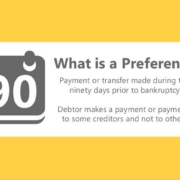
Bankruptcy PreferenceIn many circumstances, the United States Bankruptcy Code gives the bankruptcy trustee the ability to claw back payments made to creditors outside of the normal course of business during the 90 days prior to the bankruptcy filing (1 year before the filing in the case of insiders).   These claims usually come in the form of a letter written by the bankruptcy trustee or their attorney to the creditor some time after the filing of the bankruptcy.

You need to anticipate a preference claim if you receive a large payment outside the ordinary course of business in the days or months prior to a bankruptcy. These payments are often made to creditors who have long standing relationships with the debtor. Also, if you request a security interest or a guarantee for pre-existing debt during this period, this security interest is likely a preference.

There are defenses to a bankruptcy preference claim. There are basically three defenses to a preference claim: the ordinary course of business defense, the contemporaneous exchange for new goods or services defense and the new value defense. The creditor has the burden to raise these defenses.

The ordinary course of business defense requires the creditor to show the payments made to the creditor during the 90 days prior to the bankruptcy filing were made in the ordinary course of business. If the payments during the 90 days prior to bankruptcy were within normal payment terms, this is a complete defense to the preference claim.   The court will look at the payments received over the year or two prior to the bankruptcy filing to see if the date from invoice to payment varies during the 90 day period prior to filing. If the time from invoice to payment shortens during the preference period, this may be considered a preference. But if there is no variation, the ordinary course defense will work. Your attorney should review all of your a/r reports for the year or two leading up to the bankruptcy to raise this defense upon receipt of a preference claim letter.  As an alternative, the ordinary course of business defense also exists if the creditor proves the payments were made following some type of industry standard. To prove Industry standards, however, an expert must testify about this standard. Thus, this is a harder way to prove the ordinary course of business.

The “new value” defense only requires proof that goods or services were provided to the debtor after the payments were made. The value of the newly delivered goods or services will offset the preference payments.

The “contemporaneous exchange of goods” defense is just that, goods are exchanged for payment. In this circumstance, if the value of the goods equals the value of the payment, this is a defense to these amounts being clawed back as a preference.

Ultimately, as a creditor, if you foresee your customer filing for bankruptcy and they want to make a lump sum payment, you should understand these payments in the months prior to the bankruptcy may be considered a preference. You need to anticipate this money may be clawed back at some point in the future. You need to speak with your attorney about how to handle the situation and the best method to protect yourself.

The lawyers of Wetherington Hamilton, P.A. represent creditors in all types in bankruptcy matters filed in the state of Florida. Please feel free to call or email us with any questions at (813) 676-9082 or Info@WHHLaw.com.

Theodore J. Hamilton, Esq.

https://whhlaw.com/wp-content/uploads/2016/04/Bankruptcy-Preference.jpg 479 638 Ted Hamilton https://whhlaw.com/wp-content/uploads/2026/06/Wetherington-Hamilton-logo.png Ted Hamilton2016-04-18 13:13:122016-04-18 13:13:12What is a Bankruptcy Preference and How to Defend Against One in Florida

News Categories

  • Articles
  • Bankruptcy
  • Construction Law
  • Debt Collection
  • General
  • Litigation
Search Search

News Archive

  • 2025
  • 2021
  • 2019
  • 2018
  • 2017
  • 2016
  • 2015
  • 2014
  • 2013
Wetherington Hamilton, P.A.

Wetherington Hamilton, P.A.

812 W. Dr. MLK Jr., Blvd., Suite 203, Tampa, FL 33603
Phone: (813) 225-1918 • Fax: (813) 225-2531 • Email

Wetherington Hamilton, P.A.

Wetherington Hamilton, P.A.

812 W. Dr. MLK Jr., Blvd., Suite 203, Tampa, FL 33603
Phone: (813) 225-1918 • Fax: (813) 225-2531 • Email

© 2026 Wetherington Hamilton, P.A., All Rights Reserved. | Website Hosting & Web Development by RAD TECH
  • Privacy Policy
  • Accessibility
Scroll to top Scroll to top Scroll to top