Wetherington Hamilton, P.A.
  • Services
  • Process
  • Compliance
  • Attorneys
  • News
  • Contact
  • Payments
  • Refer A Claim
  • Menu Menu

Tag Archive for: Collections Law

commercial loan delinquency FED Reports

Using Commercial Loan Delinquencies to Predict the Next Market Retraction

January 23, 2018/in Articles, Debt Collection/by Ted Hamilton

commercial loan delinquency FED Reports

Today, the stock market is at an all time high. American’s are riding a wave of prosperity not seen in a long time. The obvious question on many minds, is when will the stock market begin to decline. Recently, a review of the actions of the FED in lowering interest rates in early 2008 has spurred a new interest in predicting market declines. As an attorney, my experience has shown that the number of commercial loan defaults can assist in predicting a slowdown of the economy.

In 2007, our firm began to see an uptick in its commercial loan collections cases. These cases came from Banks, Leasing Companies and others.   It began gradually in the last quarter of 2007 as large institutional clients who had previously sent only a few files a year started to send upwards of a few files a month in 2007. This figure increased dramatically during the first half of 2008. After the collapse in October of 2008, we began to see an avalanche of delinquency cases in our office. In December of 2008 alone our office received large commercial claims on a scale not seen before.

Banks are required to report their loan delinquencies to the Federal Reserve. These figures are available for review here. These numbers are a very good predictor of how the economy is doing. They show not only the income of the banks we all rely upon, but they also show the health of industries that rely on loans from these banks. The good news at this point, is these delinquency numbers are still very low. A review of the 2007-2009 figures shows the dramatic increase and the default increase in the beginning of 2008. We are not seeing these high delinquencies at this point.

Take this advice for what it is worth. We are attorneys not at all investment advisors. However, these figures and our experience handling bad debt and collections for all types of businesses shows a few trends. The best advice, is keep your eye on some of these loan delinquency reports coming out of the FED. If they start to change, beware.


Theodore J. HamiltonWetherington Hamilton founding attorney, Theodore J. Hamilton, has over 20 years of experience in handling real estate transactions and litigation. Attorney Hamilton has particular experience in matters involving complex litigation and complicated real estate matters having represented title insurance companies and individuals throughout the state of Florida. He can be reached by phone at (813) 676-9082 or via email at TJH@whhlaw.com.

https://whhlaw.com/wp-content/uploads/2018/01/commercial-loan-delinquency-FED-Reports.jpg 639 959 Ted Hamilton https://whhlaw.com/wp-content/uploads/2026/06/Wetherington-Hamilton-logo.png Ted Hamilton2018-01-23 14:17:302018-01-23 14:17:30Using Commercial Loan Delinquencies to Predict the Next Market Retraction
judge-gavel-court-orders

Why You Must Always Comply with Court Orders

June 26, 2017/in Articles, Debt Collection, General/by Ted Hamilton

judge-gavel-court-ordersCurrently, my practice focuses primarily in the area of collections, which in Florida, can be broken down into two main steps- they are obtaining Judgment and execution or collecting sums due as a result of the Court having entered Final Judgment.

Once final judgment has been entered, there are various methods available for collection of that judgment. Often, the Final Judgment contains language requiring defendants to complete what is known as a Fact Information Sheet as provided in Florida Rule of Civil Procedure Form 1.977, or defendants may be subpoenaed to appear at deposition in aid of execution.

Parties to a case are all required to comply with court orders; when a party fails to do so, the Court has the authority to find an individual in contempt. The individual is given the opportunity to purge herself/himself of the contempt by complying with the Court Order. The court may order monetary or other sanctions for failure to comply with a Court Order. I regularly hear judges tell defendants that there is no longer debtor’s prison and that they do not send people to jail for not having money to pay their debts, but when people fail to provide a fact information sheet as ordered by the Court or fail to appear at deposition after having been served, they can be found in contempt of court and, after proper notice (personal service), arrested. This is never our goal, but it can happen.

Approximately ten years ago, I brought my then 9 year-old daughter to work on “bring your daughter to work” day. The day began as a normal day (and I had no court appearances scheduled that day), but soon after arriving at work, I was told that I had to go to court because a defendant had been “picked up” for not appearing at a deposition. So I brought my daughter to the court house with me. When we arrived, a woman, our defendant, dressed in an orange jump suit and in hand cuffs, was in the court room. After a hearing in front of the presiding Judge, I took her deposition while my daughter waited patiently nearby; the Judge then ordered the woman’s immediate release. As you might imagine, this made quite an impression on my young daughter.

So what is the bottom line? Parties cannot be arrested for not having money to pay their debts…but parties to a case are all required to comply with Court Orders.


Collections Attorney Tampa

Joan W. Wadler has been a member of the Florida Bar since 1991. Her practice concentrates on Collections and Commercial Litigation, Real Estate Litigation and Associations Law.

https://whhlaw.com/wp-content/uploads/2017/06/judge-gavel-court-orders.jpg 360 640 Ted Hamilton https://whhlaw.com/wp-content/uploads/2026/06/Wetherington-Hamilton-logo.png Ted Hamilton2017-06-26 15:44:252017-06-26 15:44:25Why You Must Always Comply with Court Orders
US Bankruptcy Court Tampa

“I Just Received a Bankruptcy Notice, What Should I Do Now?”

June 5, 2017/in Articles, Bankruptcy, Debt Collection/by Ted Hamilton

Bankruptcy fUS Bankruptcy Court Tampailings in the Middle District of Florida (Tampa, Ft Myers, Orlando and Jacksonville) increased in 2016 and are on the rise in 2017 after declining for several years due to the improving local and national economy. This means that if someone (a person or company) owes you money then there is an increased chance that you might receive a Suggestion of Bankruptcy or Notice of Commencement of Bankruptcy Case advising you that a bankruptcy case has been filed.

Sometimes Creditors receive the dreaded notification or other documents pertaining to the bankruptcy filing and choose to do nothing because they are unsure of what the documents mean and what they need to do. This is understandable—bankruptcy law is often counterintuitive and complicated and certainly different from how things work in the “real world”. By doing nothing, however, you risk serious financial penalties including loss of your claim and the ability to enforce a lien against the Debtor.

So what should you do when one of these Notices arrives in the mail? The first and most important thing that I can tell you is to not give up hope! As a Creditor you have several options depending on the type of claim that you have against the Debtor. Claims are typically secured (common examples are lien on a car, a homeowner’s association/condominium association lien, or a mortgage lien) or unsecured (such as debts from credit cards, medical bills, signature loans, or deficiencies after repossession or foreclosure sales). If you hold a judgment against the Debtor they debt may be either secured or unsecured depending on what steps you have taken to collect on the judgment prior to the bankruptcy filing and whether your judgment has “attached” to the Debtor’s assets, including real estate. Regardless of the type of claim you have, you should reach out to your bankruptcy attorney to discuss what options you have in a particular case.

Here are some situations that often arise in bankruptcy cases and which require action on your behalf as Creditor. Please note that there are many other common situations which can occur in bankruptcy case. I will discuss these in future articles.

Proofs of Claim: You may receive a Notice from the bankruptcy court advising you that there are funds available to pay creditors in a case and alerting you to file a Proof of Claim. It is important to file a Proof of Claim when you receive notice to do so. The Proof of Claim is a specific form that you must file in order to be paid. The form is comprehensive and may require detailed attachments depending on the type of claim you have against the Debtor. You must file a claim to be paid. I’ve been a bankruptcy attorney for over 25 years and I’m aware of several situations where Creditors have left “money on the table” by not filing a claim in a bankruptcy case despite the Bankruptcy Trustees holding significant funds which are available to pay creditors. There is also a deadline imposed by the Court for the filing of such claims. The deadline is called the “bar date”. Claims filed after the bar date are not paid except in certain very limited situations and only if the bankruptcy court expressly permits them to be paid. Needless to say, a bankruptcy Proof of Claim is an important document that needs to be properly handled. Contact your attorney with your proof of claim questions.

Valuations of Property, Lien-Stripping and “Cramdowns”: If you hold a secured claim against the Debtor it is important to know that the Bankruptcy Code in certain circumstances allows a Debtor to seek to “value” your claim and reduce the amount of your secured claim or even eliminate your lien entirely. Typically the Debtor will seek such valuation in a motion filed with the bankruptcy court which will be served on you. In many instances the motion will be served by “negative notice” which requires you to affirmatively oppose the Motion within a very short period of time (usually 14 to 21 days) failing which the Motion will be granted without hearing and without further notice. I’ve seen large homeowners/condominium association liens and second mortgage liens removed this way and oftentimes the affected creditor—after the fact—recalls receiving the Motion but doing nothing since it was not aware of what the Debtor was trying to do and the ultimate impact on the claim. It’s usually too late to do anything about one of these Orders once it is entered so make sure to contact your attorney if you receive a Motion or Debtor’s Plan which seeks to “value” your secured claim or otherwise modify your secured claim in any way.

Fraud/Dishonesty of Debtor: A Creditor might hold a claim resulting from fraud, misrepresentation, or other types of dishonest acts by the Debtor. The Bankruptcy Code provides that certain types of these claims will not be discharged (eliminated) in the Debtor’s bankruptcy case. However, if it up to the Creditor to assert the non-dischargeable nature of the claim in the case and obtain a determination from the bankruptcy court that the debt is one of these types. If the Creditor fails to seek such a determination in these cases then the debt will be discharged regardless of the nature and severity of the fraud! Needless to say, if you believe that fraud, misrepresentation or some type of dishonesty is involved on the part of the Debtor in regards to the debt owed to you then you should contact your bankruptcy attorney to review the same and discuss the best course of action available to you.

This article is an overview of some aspects of the bankruptcy process. The bankruptcy laws are complicated and there are many nuances and exceptions to the general rules. Seek advice from your attorney when you receive a bankruptcy notice or other documents pertaining to a bankruptcy case.


Brad Hissing is a Bankruptcy Attorney with over 26 years of experience in representing creditors, Trustees and other parties in bankruptcy cases. He has extensive experience in Creditors Rights and Insolvency matters in both consumer and Chapter 11 commercial cases. He can be reached at BradH@whhlaw.com or by phone at (813) 676-9075.


https://whhlaw.com/wp-content/uploads/2017/05/US-Court-Tampa.jpg 498 334 Ted Hamilton https://whhlaw.com/wp-content/uploads/2026/06/Wetherington-Hamilton-logo.png Ted Hamilton2017-06-05 15:56:332017-06-05 15:56:33“I Just Received a Bankruptcy Notice, What Should I Do Now?”
Head of Household Exemption

When is Someone Entitled to Florida’s Head of Household Exemption?

May 15, 2017/in Articles, Debt Collection/by Ted Hamilton

Head of Household Exemption

Once a creditor obtains judgment against a debtor and collection efforts begin, there are several options for collection. One of the most effective options for collection of a judgment can be garnishment of wages or bank accounts. Garnishment statutes require strict compliance; all “I”s must be dotted and all “T”s must be crossed.

While there are several exemptions, head of household is a common exemption claimed by debtors. So how does one qualify as head of household and why is this important?

Florida statute section 222.11(c ) defines “head of family” to include “…any natural person who is providing more than one-half of the support for a child or other dependent.” When a judgment debtor claims head of household or head of family, if that person does not qualify for the exemption, then his or her disposable earnings may be subject to garnishment. However, if it is determined that the person claiming the exemption is actually head of household, then his or her wages would not be subject to garnishment.

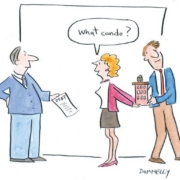
Let’s break down the definition of head of household a bit. If a single person is supporting only himself or herself, he or she would not qualify for the exemption as there is no child or other dependent involved. Sometimes the question of whether or not an individual is head of household is clear. For example, a single parent, receiving no child support or assistance from the other parent, might easily qualify for the head of household exemption. On the other hand, a single parent with shared custody of two children, may or may not qualify as head of household, dependinHead of household - single mom exemptiong on the specific facts of the case. Or what if a debtor is caring for and supporting a special needs or elderly adult? These questions can become more involved. The attorneys at Wetherington Hamilton, P.A. are experienced in handling this type of debt collection and related matters. Call us today at (813) 676-9082 to schedule your consultation.
Joan Wadler, Esq.

https://whhlaw.com/wp-content/uploads/2017/05/Head-of-Household-Exemption.jpg 417 626 Ted Hamilton https://whhlaw.com/wp-content/uploads/2026/06/Wetherington-Hamilton-logo.png Ted Hamilton2017-05-15 16:58:342017-05-15 16:58:34When is Someone Entitled to Florida’s Head of Household Exemption?
Fraudulent Transfer

What is a Fraudulent Transfer?

March 6, 2017/in Articles, Debt Collection/by Ted Hamilton

Fraudulent TransferSeveral years ago while looking for assets owned by a judgment debtor I discovered that he had recently transferred title to his Corvette to his daughter. It is unusual to find such an obvious example of a fraudulent transfer, but it was not difficult to recover the vehicle and apply it to the amount owed to my client.

Traditionally, a transfer of an asset is considered fraudulent if it is made to an “insider”, such as family member; for less than fair value; when the debtor had been sued or was threatened to be sued.

The law has also established other indicators that a transfer is fraudulent. These are known as “badges of fraud”. Some examples are: the debtor maintained possession or control of the asset; the transfer was concealed; or the transfer was of all of the debtor’s assets. Another example would be that a lien is created on property of the debtor, simply to keep it from being seized.

For corporate debts an officer who is in charge of a business may be held personally responsible if he pays himself before providing for payment to creditors. The officer is considered to hold property of the corporation “in trust” for payment to creditors of the corporation. If he pays himself and the corporation becomes insolvent, a creditor may try and recover against the officer personally. You often see it where it is clear that a business is about to go under and a person in charge of the business starts draining the assets, leaving the creditors out to dry.

Thomas K. Sciarrino Jr., Esq.

https://whhlaw.com/wp-content/uploads/2017/03/Fraudulent-Transfer.jpg 513 600 Ted Hamilton https://whhlaw.com/wp-content/uploads/2026/06/Wetherington-Hamilton-logo.png Ted Hamilton2017-03-06 13:24:522017-03-06 13:24:52What is a Fraudulent Transfer?
Servicemembers Civil Relief Act

Servicemembers Civil Relief Act (SCRA) – Protections and Ramifications

February 20, 2017/in Articles, Debt Collection/by Ted Hamilton

Servicemembers Civil Relief ActThe Servicemembers Civil Relief Act (SCRA), formally known as the Soldiers’ and Sailors’ Civil Relief Act, is a federal law affording certain protections to military members in civil actions under 50 U.S.C., and it’s extremely important to consider the protections this law provides and the ramifications it may have on civil actions and proceedings.

This federal law applies to members of the uniformed services such as the Army, Navy, Air Force, Marine Corps, or Coast Guard. The purpose of the Act is to provide certain protections to military members who have obligations that are affected by their active military service. The protections provided under the law may affect a number of actions such as entry of default judgments, mortgage obligations, eviction processes, collections practices, and other debts or obligations that were entered into by a military member.

The protections cover individuals during their time in service and for a period of time after completing service. As such, it is crucial to determine the military status of a defendant before proceeding with a civil action that may be covered under SCRA. In bringing forth an action, the Plaintiff must verify whether the defendant is on active military duty and provide the court with an affidavit setting forth the defendant’s military status or stating that military status is unable to be determined. The affidavit must be filed before the court can enter a default judgment and in some instances, a court appointed guardian must represent the interests of the defendant in order to proceed with the action unless the defendant waives their rights under the act in writing.

A service member may request a stay of the legal proceedings if the member’s current military duty requirements materially affect the member’s ability to appear and if military leave is not authorized by a commanding officer. In debt collection practices, a court order staying the action could prevent the entry of a judgment or the attachment of a garnishment. In a foreclosure action, the lender must get a court order to foreclose on a service member if the action is brought during the debtor’s active military service. Service members may also be afforded protections during an eviction process or if they are terminating an apartment or vehicle lease, however most of these protections apply to those debts or obligations that were entered into prior to active military service.

The Servicemembers Civil Relief Act can pose a number of issues and restrictions on civil proceedings, therefore it is important to be familiar with the Act and to be in compliance with all of the applicable requirements.

Ashley Simon, Esq.

https://whhlaw.com/wp-content/uploads/2017/02/Servicemembers-Civil-Relief-Act.jpg 401 534 Ted Hamilton https://whhlaw.com/wp-content/uploads/2026/06/Wetherington-Hamilton-logo.png Ted Hamilton2017-02-20 17:31:282017-02-20 17:31:28Servicemembers Civil Relief Act (SCRA) – Protections and Ramifications
Cognovit Provisions

Enforcing Your Out of State Judgment in Florida

September 9, 2016/in Articles, Debt Collection/by Ted Hamilton

Problems with Enforcing Your Out of State Judgment in Florida:

The firm of Wetherington Hamilton, P.A. regularly enforces out of state judgments in the State of Florida. These types of cases are handled through the use of the Florida Act that allows the enforcement of foreign judgments in the state of Florida. Once the judgment is recognized in Florida, the attorneys of the firm are used to using process such as garnishment, execution and levy to collect on a judgment.

Theodore J. Hamilton, Esq. 

https://whhlaw.com/wp-content/uploads/2016/09/Pasco_Cty_Courthouse_Dade_City-scaled-1.jpg 1920 2560 Ted Hamilton https://whhlaw.com/wp-content/uploads/2026/06/Wetherington-Hamilton-logo.png Ted Hamilton2016-09-09 17:52:322016-09-09 17:52:32Enforcing Your Out of State Judgment in Florida
You've been served

What Happens When Someone Attempts to Avoid Being Served?

July 15, 2016/in Articles, Debt Collection, General/by Ted Hamilton

You've been servedWhen filing a civil lawsuit in the state of Florida, initial service of process on the defendants named in the lawsuit is critical in order to confer jurisdiction on the courts. The Florida Rules of Civil Procedure and Florida Statutes govern who may serve process upon whom and how service of process may be perfected. See Rule 1.791, Fla. R. of Civ. P. and Chapters 48 and 49 of the Florida Statutes. Without perfecting service of process on the parties, the court lacks personal jurisdiction or authority over the parties and therefore lacks the authority to enter judgment. There are various forms of service, including personal or individual service, substitute service, and constructive service. Personal and substitute service give the Court personal jurisdiction over the parties who have been served, while constructive service gives the court in rem jurisdiction, over something such as property, rather than someone.

So what happens when a person attempts to avoid service of process? Can the court obtain jurisdiction over that person? As one might expect, the answer is, it depends. The statutes and rules regarding service of process must be strictly adhered to in order to perfect service on an individual. Florida Statute 48.031 (1) (a) states as follows:

Service of original process is made by delivering a copy of it to the person to be served with a copy of the complaint, petition, or other initial pleading or paper or by leaving the copies at his or her usual place of abode with any person residing therein who is 15 years of age or older and informing the person of their contents. Minors who are or have been married shall be served as provided in this section.

Interesting situations and questions of law can arise when individuals attempt to avoid being served. If a deputy or process server finds a defendant to be at home, but that person refuses to answer the door or attempts to hide, then at least one court has held that service of process was sufficient when the deputy “…read the summons in a loud voice and announced that he was leaving a copy of the summons and complaint on the doorstep for Mr. Haney and another copy with Mr. Haney as service on his wife.” Olin Corp. v Haney, 245 So.2d 669 (Fla. 4th DCA 1971). In that case, the deputy attempting to serve the defendants had observed Mrs. Haney leave the house and Mr. Haney remained in the doorway. When the deputy identified himself, Mrs. Haney ran into the house in an apparent attempt to avoid service.

The point is that in order for the court to have the authority to proceed with a civil case in Florida, service of process must be perfected. The experienced collections attorneys at Wetherington Hamilton know how to handle this issue, even when a defendant is attempting to avoid service.

Joan W. Wadler, Esq.

https://whhlaw.com/wp-content/uploads/2016/07/Process-Server-offical-papers.jpg 340 600 Ted Hamilton https://whhlaw.com/wp-content/uploads/2026/06/Wetherington-Hamilton-logo.png Ted Hamilton2016-07-15 17:33:092016-07-15 17:33:09What Happens When Someone Attempts to Avoid Being Served?
Satisfaction of Debt

The Doctrine of Accord and Satisfaction

May 9, 2016/in Articles, Debt Collection/by Ted Hamilton

Satisfaction of DebtShould you or should you not accept a payment for less that the full amount owed when it is indicated to be for full payment? It is always best to not accept a check for less that the full amount owed if there is any chance that it can be interpreted as being accepted as settlement in full. However, if you do, it may not mean that the debt is indeed settled in full by acceptance of the check.

The doctrine of accord and satisfaction is, “the substitution of a new agreement between the parties in satisfaction of a former one.” Such a compromise will effectively relieve a debtor from the remaining obligation only if a separate agreement has been established between the two parties to the effect that the payment of less than the full amount of the original debt satisfies the obligation.

Although the doctrine of accord and satisfaction is a common law doctrine of contract law, it has been statutorily codified in Florida. Two separate statutes govern the application of this doctrine, depending on whether the debt in question is either disputed and unliquidated (an unknown amount) or undisputed and liquidated (a known amount).

One statute deals with accord and satisfaction by use of an instrument (a check) when a debt is either unliquidated or disputed as to the amount or existence of a debt. The statute sets forth that, “the claim is discharged if the person against whom the claim is asserted (the debtor) proves that the instrument or an accompanying written communication contained a conspicuous statement to the effect that the instrument was tendered as full satisfaction of the claim.” F.S.A. § 673.3111(2).   In contrast, the other statute deals with accord and satisfaction in the context of liquidated claims or claims that were not disputed by the parties. The statute provides that, “when the amount of any debt or obligation is liquidated (known), the parties may satisfy the debt by written instrument other than by endorsement on a check for less than the full amount due.” F.S.A. § 725.05. The plain language of the statute appears to prevent the satisfaction (full payment) of an undisputed debt by less than the amount due through a notation on an endorsed check stating that, “the check is payment in full.”

The key to determining whether partial payment of a debt acts as a satisfaction of the debt, is whether the tender of partial payment of the debt constitutes a binding contract that effectively supersedes the original debt obligation. The new contract can either be express or implied from the surrounding circumstances. With undisputed claims, a creditor’s act of depositing a check for less than the amount owed will not constitute an implied satisfaction of the original debt, even if, the check had been enclosed in a letter stating that it was tendered in full satisfaction of the debt, else to be returned, or if words of similar import had been written on the check. It has also been held that an endorsed check for less than the amount owed on the debt does not satisfy the obligation regardless of whether the endorsed check includes the condition that the amount, is a full and complete settlement, of the debt.

While there are protections in place for a creditor who accepts a check for less than the full amount without the intention that it is for settlement in full; it is risky as there may be an issue as to whether the debt is actually disputed or liquidated. Whenever you accept payment when it is indicated that it is for settlement or payment in full, you may have precluded your ability to recover the full amount owed. The attorneys at Wetherington Hamilton have experience representing creditors in many different situations. Please contact the author for more information.

Thomas K. Sciarrino, Esq.

https://whhlaw.com/wp-content/uploads/2016/05/Satisfaction-of-Debt.jpg 1670 2513 Ted Hamilton https://whhlaw.com/wp-content/uploads/2026/06/Wetherington-Hamilton-logo.png Ted Hamilton2016-05-09 13:29:392016-05-09 13:29:39The Doctrine of Accord and Satisfaction
Statute of Limitations

What is Statute of Limitations and Why is it Important?

April 1, 2016/in Articles, Debt Collection/by Ted Hamilton

Statute of LimitationsBlack’s Law Dictionary defines statute of limitations as follows: “Statutes of the federal government and various states setting maximum time periods during which certain actions can be brought or rights enforced. After the time period set out in the applicable statute of limitations has run, no legal action can be brought regardless of whether any cause of action ever existed.” Sounds like a lot of legal jargon.

So what does this mean in Florida for civil actions? Florida Statute 95.11 governs the statute of limitations for actions other than for the recovery of real property. For example, the statute of limitations for an action on a Florida Judgment is twenty years (20). It is five (5) years for an action to foreclose a mortgage, or on a written contract, and the statute of limitations is four (4) years for an action on an obligation not founded on a written instrument, including an action for the sale and delivery of goods and on store accounts pursuant to Florida Statute 95.11 (3) (k). If one is pursuing a deficiency on a note secured by a mortgage, the statute is only one year from the day after the clerk of court issues the certificate or the day after the mortgagee accepts a deed in lieu of foreclosure. These are just a few examples of statutes of limitation in Florida, and the legal analysis can be complicated, depending on the facts of the case when applied to the existing law.

Why does the statute of limitations matter? Quite simply, if a law suit is not initiated prior to the running of the statute of limitations for a particular case, and if the defendant raises the statute of limitations as a defense, the case may be time-barred. While there may be events that toll the statute, the rationale behind it is to encourage litigation while witnesses and records are still available, and memories are “fresh”. As indicated, the statute of limitations differs depending on the type of case. The idea is to not wait too long before taking appropriate legal action.

Dealing with a case involving the statute of limitations can be a complicated process and is best done with the consultation of an experienced attorney. If you are considering filing suit and have questions about a particular case or are concerned that the statute of limitations may have run, contact the reputable attorneys at Wetherington Hamilton today and schedule your consultation.

Joan W. Wadler, Esq.

https://whhlaw.com/wp-content/uploads/2016/04/Statute-of-Limitations.jpg 532 800 Ted Hamilton https://whhlaw.com/wp-content/uploads/2026/06/Wetherington-Hamilton-logo.png Ted Hamilton2016-04-01 16:45:312016-04-01 16:45:31What is Statute of Limitations and Why is it Important?

News Categories

  • Articles
  • Bankruptcy
  • Construction Law
  • Debt Collection
  • General
  • Litigation
Search Search

News Archive

Wetherington Hamilton, P.A.

Wetherington Hamilton, P.A.

812 W. Dr. MLK Jr., Blvd., Suite 203, Tampa, FL 33603
Phone: (813) 225-1918 • Fax: (813) 225-2531 • Email

Wetherington Hamilton, P.A.

Wetherington Hamilton, P.A.

812 W. Dr. MLK Jr., Blvd., Suite 203, Tampa, FL 33603
Phone: (813) 225-1918 • Fax: (813) 225-2531 • Email

© 2026 Wetherington Hamilton, P.A., All Rights Reserved. | Website Hosting & Web Development by RAD TECH
  • Privacy Policy
  • Accessibility
Scroll to top Scroll to top Scroll to top