

Wetherington Hamilton, P.A.
  • Services
  • Process
  • Compliance
  • Attorneys
  • News
  • Contact
  • Payments
  • Refer A Claim
  • Menu Menu
buying a franchise

Buying a Franchise? Read This First.

May 2, 2016/in Articles, General/by Ted Hamilton

buying a franchiseTo a middle manager in corporate America, owning one’s own business can appear very attractive. Often, buying a franchise business is a more attractive option than simply starting your own business from scratch. A franchise is a form of business that already has an established product or service in which the owner (the “franchisor”) enters into a contract with another, separately-owned business (the “franchisee”), which operates the business within a certain defined territory or from a specific location.

A good franchisor has invested a great deal of time and money developing a proven operating system for its particular type of business. Franchisors often provide detailed policy and procedure manuals that address many of the day-to-day problems associated with owning a business. Moreover, franchisors often (and should) provide training in these policies and procedures, enabling the franchise owner to quickly get up to speed on business operations and the actual processes by which the franchise and franchisee will conduct day-to-day operations.

In addition to a proven business operating system, many franchisors have developed strong trademarks and service marks, such as business names, catch phrases, and logos that are associated with their businesses and that are recognizable in the marketplace. These marks are the embodiment of the franchisor’s goodwill and name recognition in the given field of operations, and the franchisee is intended to acquire the benefits of the franchisor’s branding investment and efforts. In the franchise agreement, the franchisor licenses these trademarks and other intellectual property to its franchisees, allowing franchisees to use these recognizable names or phrases in their own businesses – imparting to them immediate name recognition and legitimacy.

Investigating the Franchise Opportunity

The franchisee is often making a very significant investment in his or her franchise. That investment should not be made without a thorough investigation of the franchisor and an understanding of the strength or weakness of the particular franchise opportunity. A weak franchise – one in which the trademarks are not particularly strong or well-known, or in which the franchisor does not have adequate financial resources to support its franchisees – can be a very poor investment.

Every franchisor must provide a prospective franchisee with a franchise disclosure document (the “FDD”). The contents of the FDD are to a high degree dictated by the federal franchise regulations and it is a rich source of information – and potential questions – about the franchisor and the strength (or weakness) of the franchise. The FDD and its associated tables, charts and appendices can tell the prospective franchisee a great deal about the background and financial strength of the franchisor. The prospective franchisee MUST read the FDD and should seek a lawyer’s assistance with anything in the FDD that he or she does not understand.

The FDD always contains the identity and contact information of other franchisees in the system. The prospective franchisee should contact several current and former franchisees, who are in the best position to provide inside knowledge about the pros and cons of the system. Questions should include the following:

  • Were the franchisor’s estimate of the working capital requirements to get up to speed accurate?
  • In addition to the franchise fee rendered as part of the franchise agreement, are there any other ongoing service fees or other fees payable to the franchisor?
  • Did the franchisor provide adequate training in the business system?
  • Were the operations manuals helpful and easy to follow?
  • Did the franchisor provide meaningful ongoing assistance in getting the franchisee’s business or site up and running?
  • Do the franchisees think that the system added value that would not be available to a similar business operating outside a franchise system?

Finally, because much of the value of a franchise is associated with the strength of the franchisor’s trademarks and other intellectual property, the prospective franchisee or his or her attorney should conduct a search on the US Patent and Trademark Office website to confirm that the franchisor’s trademarks are properly registered. If the franchise is not particularly well-known or well-established, an attorney can (and should) analyze the strength or weakness of a franchisor’s trademarks and discuss those strengths or weaknesses with the potential franchisee.

The Legal Relationship Between Franchisee & Franchisor: The Franchise Agreement.

Franchisors regularly tell prospective franchisees that the franchise agreement is non-negotiable. Even if that is true, it is still important for the prospective franchisee to understand what is contained in the agreement, and it is up to his or her lawyer to interpret and explain to the prospective franchisee in plain English the more complex provisions of the document.

Of course, in many cases, the franchise agreement is negotiable, or at least significant portions of it are negotiable. As with most any contract, the degree to which the franchise agreement is negotiable is related to the relative bargaining power of the parties involved. A general rule of thumb is that the more well-known and well-established the franchise, the less likely the franchisor will be willing to make any changes to the franchise agreement.

With the exception of the very strongest franchises (e.g., McDonald’s, Domino’s Pizza, 7-Eleven), there are certain provisions in the franchise agreement that an experienced attorney should be able to negotiate so that they are more franchisee-friendly.

Notice Provisions. There are many places in a franchise agreement where the franchisor has the right to exercise certain remedies upon a default by the franchisee. The franchisee’s attorney can usually insert provisions requiring advance notice and an opportunity to cure such defaults before the franchisor may exercise its remedies.

Limiting the Franchisor’s Discretion. Franchise agreements often contain provisions requiring a franchisee to obtain the franchisor’s consent to do certain things. The attorney for the franchisee should try to ensure that the franchisor does not have absolute, unfettered discretion to deny its consent when giving such consent would be reasonable based upon verifiable facts.

Trademark Protections. As discussed above, much of the value in the franchise system is attributed to the trademarks that the franchisor licenses to the franchisee. The franchisor should be willing to stand behind its trademarks and defend them in the event they are challenged by third parties. Consequently, the franchisor should be willing to indemnify the franchisee in the event the franchisee is sued on the basis of trademark infringement.

Adjoining Territories. Sometimes the franchisor is willing to grant a strong (generally that means well-financed) franchisee a right of first refusal to purchase the territories that are contiguous with his or her own and which have not yet been assigned to other franchisees. The franchisee’s attorney might even be able to negotiate a reduced price for such additional territories.

Indemnification Provisions. Franchise agreements sometimes contain unreasonable indemnification provisions. It certainly makes sense for the franchisee to indemnify the franchisor for losses or damages that the franchisor suffers as a direct result of the wrongful acts of the franchisee or its employees. But often the indemnification provisions are written much more broadly to favor the franchisor and the franchisee’s attorney should make every effort to cut back such unreasonable indemnification rights.

Advertising Requirements. A franchisee may want to request that the franchisor loosen the requirements that the franchisee spend a certain dollar amount or percent of gross sales on advertising, particularly during the first several months of operation. Some franchisors will lower these requirements during the first six months to a year, in recognition that revenue is usually very tight during the start-up stage of the business.

Forum Selection and Governing Law Clauses. Although it will rarely come to pass, the franchisee should also request that the judicial or arbitration forum for future disputes concerning the operation of the franchise or the meaning and construction of the franchise agreement be in the franchisee’s location and governed by the franchisee’s local law. Owning a franchise in Florida, while having to manage a dispute with the franchisor in Washington state, places a potentially significant burden on the franchisee to inexpensively and expeditiously resolve disputes with the franchisor.

Sale of the Franchise. All franchise agreements set conditions on a franchisee’s ability to sell or transfer the franchise. These provisions are sometimes negotiable with respect to the assignment of the franchise to family members and with respect to the franchisor’s ability to exercise a right of first refusal. Since most franchise agreements have a term of 10 to 20 years (during which the franchisee develops its own goodwill, reputation and business), it is imperative that the franchisee understands the restrictions on his or her ability to sell the franchise.

Conclusion.

Buying a franchise can be a very rewarding decision. It can also be an unmitigated disaster if the prospective franchisee does not understand what he or she is getting into. An experienced attorney can guide his or her client in the investigation of the franchise and can usually negotiate more franchisee-friendly terms in the franchise agreement. Whether the franchisee fails or succeeds will depend upon a variety of factors, but with good legal representation going into the deal, the franchisee will at least be cognizant of the legal and business risks and of her own contractual rights and responsibilities. The attorneys at Wetherington Hamilton have experience representing franchisees in many different industries, from lawn care to sandwiches. We stand ready to help. Please contact the author for more information.
Matthew J. Lapointe, Esq.

https://whhlaw.com/wp-content/uploads/2016/05/buying-a-franchise.jpg 175 700 Ted Hamilton https://whhlaw.com/wp-content/uploads/2026/06/Wetherington-Hamilton-logo.png Ted Hamilton2016-05-02 16:57:362016-05-02 16:57:36Buying a Franchise? Read This First.
Bankruptcy Preference

What is a Bankruptcy Preference and How to Defend Against One in Florida

April 18, 2016/in Articles, Bankruptcy/by Ted Hamilton

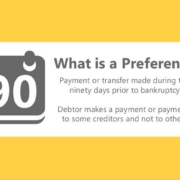
Bankruptcy PreferenceIn many circumstances, the United States Bankruptcy Code gives the bankruptcy trustee the ability to claw back payments made to creditors outside of the normal course of business during the 90 days prior to the bankruptcy filing (1 year before the filing in the case of insiders).   These claims usually come in the form of a letter written by the bankruptcy trustee or their attorney to the creditor some time after the filing of the bankruptcy.

You need to anticipate a preference claim if you receive a large payment outside the ordinary course of business in the days or months prior to a bankruptcy. These payments are often made to creditors who have long standing relationships with the debtor. Also, if you request a security interest or a guarantee for pre-existing debt during this period, this security interest is likely a preference.

There are defenses to a bankruptcy preference claim. There are basically three defenses to a preference claim: the ordinary course of business defense, the contemporaneous exchange for new goods or services defense and the new value defense. The creditor has the burden to raise these defenses.

The ordinary course of business defense requires the creditor to show the payments made to the creditor during the 90 days prior to the bankruptcy filing were made in the ordinary course of business. If the payments during the 90 days prior to bankruptcy were within normal payment terms, this is a complete defense to the preference claim.   The court will look at the payments received over the year or two prior to the bankruptcy filing to see if the date from invoice to payment varies during the 90 day period prior to filing. If the time from invoice to payment shortens during the preference period, this may be considered a preference. But if there is no variation, the ordinary course defense will work. Your attorney should review all of your a/r reports for the year or two leading up to the bankruptcy to raise this defense upon receipt of a preference claim letter.  As an alternative, the ordinary course of business defense also exists if the creditor proves the payments were made following some type of industry standard. To prove Industry standards, however, an expert must testify about this standard. Thus, this is a harder way to prove the ordinary course of business.

The “new value” defense only requires proof that goods or services were provided to the debtor after the payments were made. The value of the newly delivered goods or services will offset the preference payments.

The “contemporaneous exchange of goods” defense is just that, goods are exchanged for payment. In this circumstance, if the value of the goods equals the value of the payment, this is a defense to these amounts being clawed back as a preference.

Ultimately, as a creditor, if you foresee your customer filing for bankruptcy and they want to make a lump sum payment, you should understand these payments in the months prior to the bankruptcy may be considered a preference. You need to anticipate this money may be clawed back at some point in the future. You need to speak with your attorney about how to handle the situation and the best method to protect yourself.

The lawyers of Wetherington Hamilton, P.A. represent creditors in all types in bankruptcy matters filed in the state of Florida. Please feel free to call or email us with any questions at (813) 676-9082 or Info@WHHLaw.com.

Theodore J. Hamilton, Esq.

https://whhlaw.com/wp-content/uploads/2016/04/Bankruptcy-Preference.jpg 479 638 Ted Hamilton https://whhlaw.com/wp-content/uploads/2026/06/Wetherington-Hamilton-logo.png Ted Hamilton2016-04-18 13:13:122016-04-18 13:13:12What is a Bankruptcy Preference and How to Defend Against One in Florida
Statute of Limitations

What is Statute of Limitations and Why is it Important?

April 1, 2016/in Articles, Debt Collection/by Ted Hamilton

Statute of LimitationsBlack’s Law Dictionary defines statute of limitations as follows: “Statutes of the federal government and various states setting maximum time periods during which certain actions can be brought or rights enforced. After the time period set out in the applicable statute of limitations has run, no legal action can be brought regardless of whether any cause of action ever existed.” Sounds like a lot of legal jargon.

So what does this mean in Florida for civil actions? Florida Statute 95.11 governs the statute of limitations for actions other than for the recovery of real property. For example, the statute of limitations for an action on a Florida Judgment is twenty years (20). It is five (5) years for an action to foreclose a mortgage, or on a written contract, and the statute of limitations is four (4) years for an action on an obligation not founded on a written instrument, including an action for the sale and delivery of goods and on store accounts pursuant to Florida Statute 95.11 (3) (k). If one is pursuing a deficiency on a note secured by a mortgage, the statute is only one year from the day after the clerk of court issues the certificate or the day after the mortgagee accepts a deed in lieu of foreclosure. These are just a few examples of statutes of limitation in Florida, and the legal analysis can be complicated, depending on the facts of the case when applied to the existing law.

Why does the statute of limitations matter? Quite simply, if a law suit is not initiated prior to the running of the statute of limitations for a particular case, and if the defendant raises the statute of limitations as a defense, the case may be time-barred. While there may be events that toll the statute, the rationale behind it is to encourage litigation while witnesses and records are still available, and memories are “fresh”. As indicated, the statute of limitations differs depending on the type of case. The idea is to not wait too long before taking appropriate legal action.

Dealing with a case involving the statute of limitations can be a complicated process and is best done with the consultation of an experienced attorney. If you are considering filing suit and have questions about a particular case or are concerned that the statute of limitations may have run, contact the reputable attorneys at Wetherington Hamilton today and schedule your consultation.

Joan W. Wadler, Esq.

https://whhlaw.com/wp-content/uploads/2016/04/Statute-of-Limitations.jpg 532 800 Ted Hamilton https://whhlaw.com/wp-content/uploads/2026/06/Wetherington-Hamilton-logo.png Ted Hamilton2016-04-01 16:45:312016-04-01 16:45:31What is Statute of Limitations and Why is it Important?
Suing for Payment in Florida

Suing for Payment in Florida

March 25, 2016/in Articles, Debt Collection, General/by Ted Hamilton

Suing for Payment in FloridaIn the state courts of Florida, suing for payment can be done in three different jurisdictions – Small Claims, County Court, and Circuit Court.


The jurisdiction for Small Claims is now for amounts not exceeding $5,000.00 for the principal balance claimed. (Note: This does not include interest, costs, and attorney’s fees.) It is also important to note that there are separate Rules of Summary Procedure for Small Claims Court. County Court is for matters involving $5,0001.00 or not exceeding $15,000.00. The County Court judges are the same as the Small Claims judges; however, the procedures are different, as one follows the Rules of Civil Procedure. The jurisdiction for Circuit Court is for amounts exceeding $15,000.00.

Although the Florida Rules of Civil Procedure have several forms which may be simply used for suits for accounts stated, suits for open accounts, and suits on promissory notes, it is very simple to plead a cause of action in Florida.

“A cause of action and shall contain (1) a short and plain statement of the grounds upon which the court’s jurisdiction depends …. (2) a short and plain statement of ultimate facts showing the pleader is entitled to relief, and (3) a demand for judgment for the relief to which the pleader deems him or herself entitled.”

You do not have to anticipate the defendant’s defenses in pleading a Complaint; however, you should act to avoid their defenses by giving sufficient notice of facts and attach all pertinent exhibits and reference the exhibits within the Complaint.

In the Small Claims Court, a Pretrial Summons is necessary to apprise the defendants of a date certain in which they shall appear for pretrial to answer the allegations of the Complaint. There is not the opportunity to file a response unless leave of court is given, and the defendant must simply appear to answer the claims made by the plaintiff. If the defendant is served and fails to appear, a default and judgment may be submitted against them without further notice.

In Florida, the County and Circuit Court summonses are the same among the counties. When a civil action begins, the summons is issued by the Clerk and delivered then to a process server or sheriff, of Plaintiff’s choosing. Service of process may be effectuated by an officer authorized by law to serve process, or as court-appointed “competent person” not interested in the action. Service of process must be made on a defendant within 120 days after an initial pleading is filed, unless good cause for failure to serve is established.

A Complaint has several important sections which put the defendant on “notice” of the claims made against him or her.

As an initial matter, the Complaint must disclose the correct name of the plaintiff. With respect to the naming of the defendant, the defendant should be properly named as either a corporation, partnership, sole proprietorship, or individual.

It is important to note that there are only certain places where you can file a lawsuit. The Florida Statutes outline that a defendant may be sued where the contract was signed, payment was made, or the defendant resides (or does business).

After suit is filed an service is obtained the case can be concluded in several ways. If the defendant fails to respond a default and default judgment can be obtained. If defendant responds but does not plead any defenses, a summary judgment may be obtained. If there a real defenses raised which present issues of fact or law, the case would proceed to trial and the court would rule in favor of one side or the other.

Thomas K. Sciarrino, Jr., Esq.

https://whhlaw.com/wp-content/uploads/2016/03/Suing-for-Payment.jpg 325 500 Ted Hamilton https://whhlaw.com/wp-content/uploads/2026/06/Wetherington-Hamilton-logo.png Ted Hamilton2016-03-25 14:59:012016-03-25 14:59:01Suing for Payment in Florida
health apps

HIPAA Privacy: Is There an App for That?

March 11, 2016/in Articles, General/by Ted Hamilton

health applications

Health apps are very popular in our tech savvy and health conscious society. Just Google “health apps” and you will be greeted with “The 10 Best Apps to Improve Your Health” and “The 25 Best Fitness Apps for 2016” among many other hits. Far down on the Google list, however, you might find this gem from Healthcare IT News: “8 Out of 10 Mobile Health Apps Open to HIPAA Violations, Hacking, Data Theft.”

The Healthcare IT News article claims that 84% of U.S. FDA-approved health apps that were tested by IT security vendor Arxan Technologies did not adequately address security issues. How is this possible? Don’t these apps need to comply with HIPAA, the federal privacy law?

Rules issued by the federal government under the Health Insurance Portability and Accountability Act (“HIPAA”) regulate the use and disclosure of individually identifiable health information. But HIPAA does not apply to all users of health information, only those who are specifically covered by the law. The HIPAA regulations apply to health care providers such as doctors, dentists, hospitals and nursing homes, as well as health insurance companies and organizations known as “healthcare clearinghouses.” Healthcare clearinghouses are entities that serve as weigh stations, processing non-standard data into standardized data elements that are recognizable by insurance companies, the federal government and others who pay for health care services. These entities that are subject to the HIPAA regulations are known as “covered entities.”

Covered entities often outsource functions that require access to health information. For example, many physician groups contract with medical billing companies, which review medical information provided by the doctor and prepare bills that are transmitted electronically to health insurance companies for payment.   Medical billing companies and other contractors that collect, create, receive, maintain or transmit health information on behalf of covered entities are known as “business associates.” These business associates are also subject to the HIPAA regulations, as are any subcontractors of the business associates.

App developers have long sought better guidance from the federal government about how HIPAA applies to their industry.   In response, on February 11, 2016, the Department of Health and Human Services’ Office for Civil Rights (“OCR”) released “Health App Use Scenarios & HIPAA” (the “Health App Guidance”). The Guidance sets out various factual scenarios involving health apps and OCR’s conclusion whether or not the HIPAA regulations would apply to the app developer in each scenario. The Health App Guidance builds upon OCR’s previous guidance concerning business associates and frames the scenarios in terms of whether or not the app developer is a business associate, and thus subject to the HIPAA regulations.

Unless the app is being developed by a health care provider, health insurer or healthcare clearinghouse, the app developer is almost assuredly not a covered entity. But under certain circumstances it is entirely possible that the app developer is a business associate of a covered entity and is therefore subject to the HIPAA regulations. The scenarios provided in the Guidance illustrate the basic analysis that must be performed to determine whether or not the app developer is a business associate.

The Health App Guidance makes clear that health apps that are downloaded and used solely by individual consumers are generally not subject to HIPAA because the developer is not collecting, creating, receiving, maintaining or transmitting health information on behalf of a covered entity. However, health apps that are offered directly by or on behalf of healthcare providers or their business associates and that collect, store or transmit health data very likely are subject to HIPAA. In those cases where the app developer is providing a service on behalf of the covered entity itself, or on behalf of a business associate of the covered entity, that app developer is, itself, a business associate subject to HIPAA.

While it is in every health app developer’s interest to make sure its app maintains the confidentiality and security of its customers’ health data, not all health app developers are subject to the HIPAA regulations. The Health App Guidance provides 6 scenarios that illustrate OCR’s analysis of the regulations. There are countless other scenarios not covered by the Guidance, however. Health app developers should seek advice from qualified attorneys with experience in health law in general and the HIPAA regulations in particular. The lawyers at Wetherington Hamilton are available to advise health app developers on these, and other regulatory matters.

Matthew J. Lapointe, Esq.

https://whhlaw.com/wp-content/uploads/2016/03/health-apps.jpg 550 1600 Ted Hamilton https://whhlaw.com/wp-content/uploads/2026/06/Wetherington-Hamilton-logo.png Ted Hamilton2016-03-11 17:29:392016-03-11 17:29:39HIPAA Privacy: Is There an App for That?
alternative billing methods

Attorney Billing Methods – More Than Just the Hourly Rate

March 2, 2016/in Articles, General/by Ted Hamilton

attorney billing methodsSo you have a lawsuit of some kind and it is not a personal injury claim. You can’t afford an attorney or you may be able to afford an attorney, but you really don’t want to spend the money to pursue your claim. If your claim involves an action for money of any kind, for example a breach of contract, foreclosure, for possession of some type of real estate, breach of fiduciary duty or other type of claim for money, an alternative fee arrangement may be the way to go.

The age of hourly billing for attorneys is rapidly changing. Our firm handles matters using all types of alternative fee arrangements. When you chose your attorney to handle a breach of contract claim, you need to consider using these types of attorney billing methods to limit your exposure to excessive attorney’s fees. The hourly billing method involves the attorney billing by the hour for all work performed on the case. You receive a monthly bill with the time entries charged to your file for the month. This method works well in cases not involving a claim for money, or in cases where you are defending a claim brought against you by someone else.

Alternatives to the hourly attorney billing method include a contingency fee, a suit fee plus contingency fee, a straight flat fee, a success fee plus reduced hourly, a reduced hourly rate plus contingency and a flat fee.

The most common type of alternative fee used by attorneys is the contingent fee. A contingent fee involves the attorney getting paid a percentage of the recovery. This type of billing may be used to handle all types of commercial collections claims. A suit fee may be included in this type of claim. A suit fee is a fee earned by the attorney upon filing suit. For example, if the attorney sees your case as more complicated than a normal collections case, the suit fee will help get the case started. This suit fee can range from a few hundred dollars to thousands of dollars depending on the amount involved and the complexity of the case. In addition, a contingency fee may also be used in combination with a reduced hourly rate. For example if the attorneys rate is normally $350 per hour. This rate might be lowered to $250 per hour with a contingency of say 15% or 20% upon collection.

A straight flat fee is often used for matters involving contract preparation and drafting. You need to have your attorney commit to the fee at the outset as much as possible to ensure you will not be charge more than you anticipate for a particular project.

A success fee, is an additional fee received by the attorney upon a successful outcome. Often, this fee is included along with a slightly reduced hourly rate or a lower contingency rate. In the end this fee may be substantial, but of course, it is only paid if you win.

Ultimately, it is up to you to ask your attorney about these billing alternatives. Feel free to call our firm any time to discuss billing alternatives to help you get your claim filed.

Theodore Hamilton, Esq.

https://whhlaw.com/wp-content/uploads/2016/03/alternative-billing-methods.jpg 450 810 Ted Hamilton https://whhlaw.com/wp-content/uploads/2026/06/Wetherington-Hamilton-logo.png Ted Hamilton2016-03-02 13:23:122016-03-02 13:23:12Attorney Billing Methods – More Than Just the Hourly Rate
Mediation

Why Mediate in Florida State Court Proceedings?

February 19, 2016/in Articles, General/by Ted Hamilton

MediationMediation is a voluntary, confidential process whereby the parties to a lawsuit or dispute gather with their respective counsel, if any, and a mediator with the goal of resolving their issues. The process is voluntary, although it is often court-ordered. A mediator is not a judge or decision maker; rather, a mediator is a neutral third party who facilitates communication between the parties.

So let’s break this down a bit. How can a court-ordered meditation be voluntary? In state court, if mediation is court-ordered, the parties to the action are required to appear. The process is voluntary – that is the parties are not required to reach an agreement. Generally, in Florida state courts, there is no good faith requirement for mediation. (Local rules and Federal Court rules may have different requirements regarding mediating in good faith). The parties must have full settlement authority and must comply with all court orders and rules regarding the proceedings. The process itself is voluntary and whether or not the parties reach an agreement depends upon the facts and circumstances of each case.

Usually, communications held during mediations are confidential, except as provided by law. The parties should be able to freely discuss the case during mediation without concern for having their words used against them at a later time. The rationale is to encourage open dialog throughout the process. If the parties reach agreement at mediation, a signed, written agreement is not confidential, unless it states otherwise.

The mediator’s role is not that of decision maker. Unlike a judge or arbitrator, the mediator acts as an impartial third party to facilitate or guide the mediation process. So, what is the point of mediation if the mediator isn’t making a ruling on the case? Mediation allows the opportunity for all parties to communicate freely and to have input into any potential resolution. Typically, if a judge or jury decides the case, at least one party will not be pleased with the outcome. If successful, mediation can save the time and expense of trial, with the parties having input into the resolution of their case.

Joan W. Wadler, Esq.

https://whhlaw.com/wp-content/uploads/2016/02/Mediation-in-Florida.png 400 600 Ted Hamilton https://whhlaw.com/wp-content/uploads/2026/06/Wetherington-Hamilton-logo.png Ted Hamilton2016-02-19 20:07:452016-02-19 20:07:45Why Mediate in Florida State Court Proceedings?
Perfecting a Judgment Lien

Perfecting a Judgment Lien

January 29, 2016/in Articles, Debt Collection/by Ted Hamilton

A judgment obtained by a Florida court becomes a lien on the judgment debtor’s real property when it is properly recorded. The creditor’s primary interests in perfecting the judgment as a lien on a debtor’s property are two-fold: (1) first and foremost, strict technical compliance with applicable rules and statutes; (2) to move as quickly as possible to perfect the lien after obtaining a judgment. Failure to adhere to technical requirements may result in loss of priority as against later judgment creditors or transfers of property by the debtor, unaffected by a creditor’s judgment lien. Prompt action to perfect the judgement lien is necessary to establish priority against other creditors, and to obtain execution before the debtor has sufficient opportunity to transfer or assign his/her assets.

Perfecting a Judgment LienImmediately upon obtaining a final judgment, the creditor must obtain certified copies of the judgment and record a certified copy in any and all counties where the judgment debtor owns real property. Recordation of a certified copy creates a lien on the judgment debtor’s real property in that county. Creditors need to be cautious and make sure a certified copy (obtained from the clerk where the judgment has been entered) has been recorded. Many courts will record a copy of the judgment after entry, but this does not create a judgement lien. A certified copy must be recorded to be in compliance with Florida law.

It also must be noted that there is no lien if the address of the judgment creditor is not included. A judgment does not become a lien on real property unless the address of the person who has a lien as a result of such judgment is contained in the judgment or an affidavit with such address is simultaneously recorded with the judgment, order, or decree.

Thomas K. Sciarrino, Esq.

https://whhlaw.com/wp-content/uploads/2016/01/Judgment-Lien.jpeg 183 275 Ted Hamilton https://whhlaw.com/wp-content/uploads/2026/06/Wetherington-Hamilton-logo.png Ted Hamilton2016-01-29 17:23:382016-01-29 17:23:38Perfecting a Judgment Lien
hipaa enforcement

HIPAA Enforcement – Small Physician Groups Are Not Immune

January 25, 2016/in Articles, General/by Ted Hamilton

hipaa enforcementSmall medical practices who think they don’t need to worry about HIPAA privacy and security compliance had better think again.

In December 2013, Adult & Pediatric Dermatology, a 12-physician group in Massachusetts, agreed to pay $150,000 to US Health & Human Services for alleged violations of the HIPAA Privacy, Security, and Breach Notification Rules arising out of a lost, unencrypted flash drive containing patient information. In addition to the cash settlement, HHS required the group to implement a corrective action plan, including developing a risk analysis and risk management plan to address and mitigate any security risks and vulnerabilities.

Prior to the Massachusetts case, HHS reached a $100,000 settlement with a 5-physician group in Phoenix, Arizona. HHS accused Phoenix Cardiac Surgery, P.C. of a “multi-year, continuing failure … to comply with the requirements of the Privacy and Security Rules.” The practice was posting clinical and surgical appointments for its patients on an Internet-based calendar that was publicly accessible. In addition, the practice had failed to implement even the most basic requirements of the Privacy and Security Rules – such as appointing a security official or adopting basic policies and procedures to appropriately safeguard patient information.

A review of the HHS website on which OCR posts examples of its enforcement actions reveals that most of the examples involve large hospitals, national drugstore chains, and large health insurance companies. The list of private practices facing enforcement actions appears to be growing, however. Surprisingly, many of the enforcement actions cited on the website deal with a private practice’s misunderstanding of the patient’s right to access his or her own medical records. For example:

  • A practice refused to honor an individual’s request for a complete copy of her minor son’s medical record.
  • A practice improperly billed a patient a $100.00 “records review fee” in connection with the patient’s request for a copy of his medical record.
  • A practice denied an individual access to his records on the basis that a portion of the individual’s record was created by a physician not associated with the practice.
  • A physician requested that patients sign an agreement entitled “Consent and Mutual Agreement to Maintain Privacy.” The agreement prohibited the patient from directly or indirectly publishing or airing commentary about the physician, his expertise, and/or treatment in exchange for the physician’s compliance with the Privacy Rule.
  • A private practice physician denied a patient access to her medical records because the patient had an outstanding balance for services the physician had provided.

Each of these cases arose out of a complaint filed with the OCR by an individual patient.   And each of these cases involves one of the most basic provisions of the HIPAA Privacy Rule.

The experiences of Adult & Pediatric Dermatology and Phoenix Cardiac Surgery should serve as clear warnings that HHS is not only investigating those complaints brought against large health insurers and drug store chains, but that complaints against small, private practices are going to be investigated and prosecuted as well. Physicians, dentists and other private providers would be well advised to make sure they have the necessary policies and procedures in place to comply with HIPAA and that staff members are being properly trained. If you have an “off the shelf” generic HIPAA manual, Wetherington Hamilton, P.A. has the resources to help you tailor the policies to your practice and to provide you with the necessary staff training. If you don’t have a HIPAA manual or you aren’t providing training to your staff you are risking big fines.


Matthew J. Lapointe, Esq.

https://whhlaw.com/wp-content/uploads/2016/01/hipaa-enforcement.jpg 800 1200 Ted Hamilton https://whhlaw.com/wp-content/uploads/2026/06/Wetherington-Hamilton-logo.png Ted Hamilton2016-01-25 11:34:322016-01-25 11:34:32HIPAA Enforcement – Small Physician Groups Are Not Immune
Page 2 of 212

News Categories

  • Articles
  • Bankruptcy
  • Construction Law
  • Debt Collection
  • General
  • Litigation
Search Search

News Archive

  • 2025
  • 2021
  • 2019
  • 2018
  • 2017
  • 2016
  • 2015
  • 2014
  • 2013
Wetherington Hamilton, P.A.

Wetherington Hamilton, P.A.

812 W. Dr. MLK Jr., Blvd., Suite 203, Tampa, FL 33603
Phone: (813) 225-1918 • Fax: (813) 225-2531 • Email

© 2026 Wetherington Hamilton, P.A., All Rights Reserved. | Website Hosting & Web Development by RAD TECH
  • Privacy Policy
  • Accessibility
Scroll to top Scroll to top Scroll to top